
Need some advice?
How to Choose Office Trousers for Staff Uniforms
Office trousers need to suit the appearance your business wants and the working day your staff actually have. A reception team may move between a desk and greeting visitors, while showroom staff spend more time standing, walking and helping customers.
Start with our office trousers, then compare the styles, available cuts, leg lengths and care instructions. Agree those choices before collecting sizes and ordering for the full team.
- Page Contents
- Agree the office uniform brief
- Compare tailored trousers and chinos
- Check fit while seated and moving
- Coordinate the complete outfit
- Choose a practical care routine
- Plan quantities and repeat orders
- Build your office trouser order
Agree the Office Uniform Brief
Decide which roles will wear the trousers and the situations they need to cover. Include normal desk work, customer appointments, reception duties, meetings and any time spent away from the desk.
Set out the required appearance in terms staff and suppliers can use. For example, you might specify a coordinated charcoal trouser with a shirt and jacket for reception, or navy chinos with a branded polo for a showroom team.
Also decide how much choice the uniform will allow. You can approve several suitable cuts within the same colour scheme, rather than expecting one trouser shape to fit everyone.
If staff will provide their own trousers under a dress code, be clear about the permitted styles and colours. If the business is issuing them, record the exact approved products so the original order and later replacements follow the same brief.
For roles that also involve outdoor duties, workshop areas or other operational work, check those clothing requirements separately. Our work-trouser buying guide covers the wider comparison by task and working environment.
Compare Tailored Trousers and Chinos
Choose the level of formality before comparing details such as pocket layout or fabric composition.
| Style | What it lets you compare | Checks before choosing |
|---|---|---|
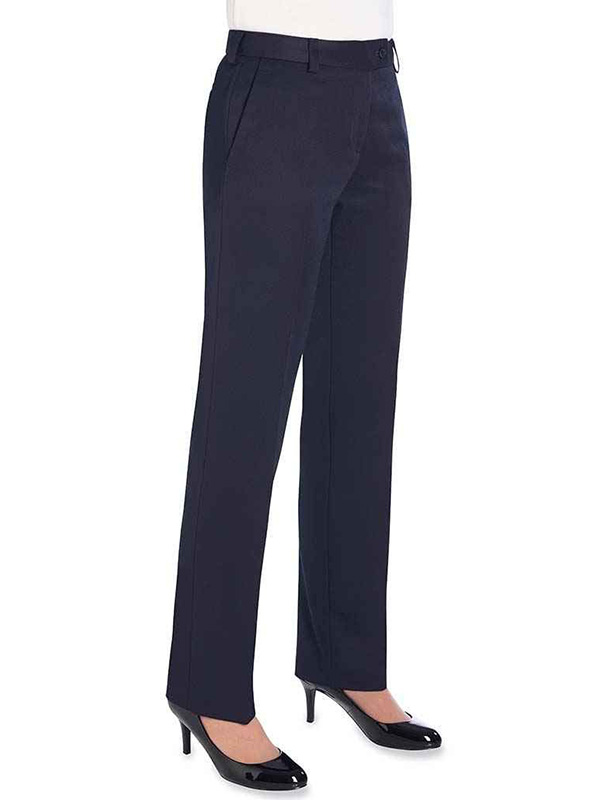
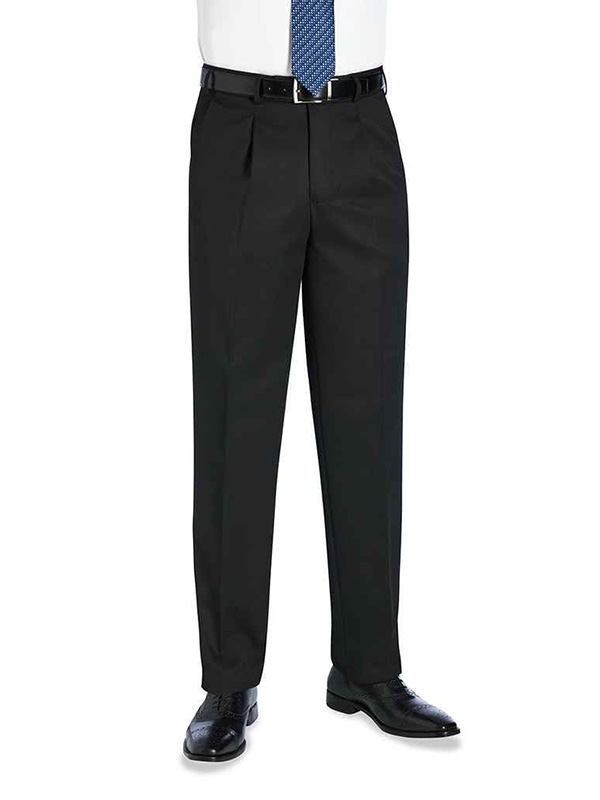
| Tailored or formal trousers | A coordinated look with shirts, blouses, waistcoats or jackets, according to the uniform brief | Available cuts, pleated or flat-front styling, matching collection options, leg lengths and care |
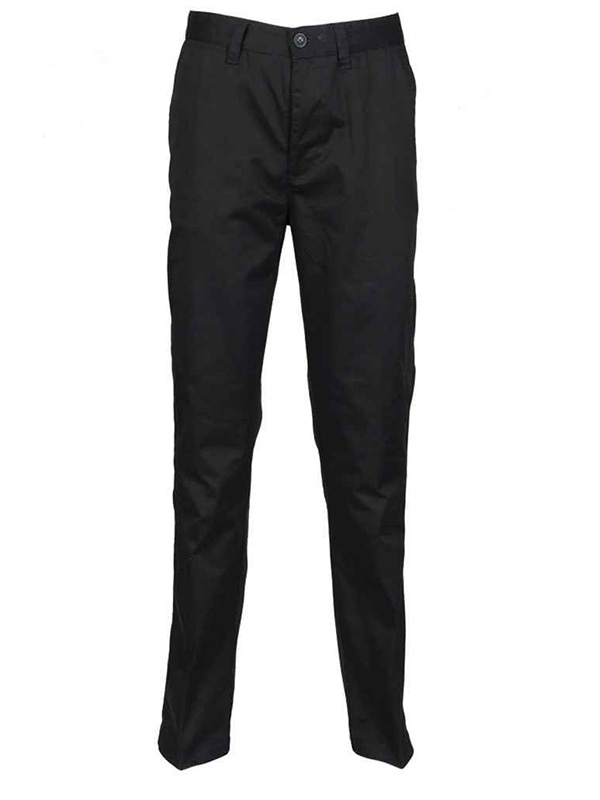
| Chinos | A smart uniform with shirts, polos or knitwear where the workplace accepts that style | Colour, fabric finish, cut, pocket shape, care and how the outfit looks together |
A trouser described as slim, tailored or classic still needs a wearer trial. Compare the actual shape through the waist, hips, seat and legs, rather than selecting from the fit label alone.
Stretch is a fabric or construction feature that can appear in different trouser styles. Check where it is provided and how the finished garment moves. A stretch description does not remove the need to choose the right size and cut.
Check the details staff will use each day: waistband, fastening, belt loops and pockets. Try the trousers with the phone, keys or other small items normally carried. A neat-looking pocket may be uncomfortable or pull out of shape when loaded.
Check Fit While Seated and Moving
Use the size guide for the exact garment. Collect the relevant waist, hip and inside-leg measurements, and check whether the chart describes body measurements or garment measurements.
Include the available women's, men's or unisex cuts according to each wearer's fit needs. Staff do not all need the same cut for the finished uniform to look coordinated.
Trial the shortlist with the footwear, belt and tops that staff will normally wear. Give people time to check ordinary working positions:
| Fit check | What to assess |
|---|---|
| Sitting at a desk | Comfort at the waist and through the seat and thighs, including loaded pockets |
| Standing up and walking | Whether the trousers sit comfortably without repeated adjustment |
| Reaching and bending | Movement through the waist, hips and knees without excessive pulling |
| Using pockets | Access, secure storage and the appearance with normal contents in place |
| Wearing the agreed footwear | Finished leg length and how the hem sits over the shoe |
| Wearing the complete uniform | How the waistband works with tucked or untucked tops, and how the outfit looks seated and standing |
Check whether the selected size and leg option is supplied finished or unhemmed. Where hemming is needed, agree who will carry it out, the finished length, cost and timing before the full order is placed.
Record the approved garment code, cut, size and leg length for each wearer. Keep that combination for reorders rather than recording only a general size such as “medium”.
Coordinate the Complete Outfit
Compare the actual trousers with the proposed shirts, blouses, polos and layers. Two garments called navy, black or charcoal can look different beside one another. Decide whether the brief needs a matching collection or a coordinated colour combination.
Where trousers need to match a jacket or waistcoat, check the named collection and colour references with your supplier. For separates, agree the combination using the selected garments rather than relying on colour names alone.
Choose the uniform's shared elements, such as the colour palette and logo position, while allowing suitable differences in cut. Our office cardigan guide covers cardigan styles and the tops worn underneath. For a wider choice of jumpers and cardigans, use our embroidered knitwear guide.
A logo on the accompanying top may provide the company identification you need while the trousers remain plain. If a trouser logo is required, confirm the method and position for a suitable non-FR garment supplied by XAMAX® before choosing it on that basis.
Choose a Practical Care Routine
Read the care instructions for each shortlisted model. Confirm whether it can be washed in the intended routine, how it may be dried, and the ironing or pressing it needs before the next shift.
Machine-washable garments can have different washing and drying instructions. The fact that two trousers can go in a washing machine does not mean they can be cleaned together on the same programme.
Discuss commercial laundry arrangements before choosing a garment. If staff will wash the trousers at home, check that the permitted routine is practical alongside their issue quantity and working pattern.
Where a trial garment is available, assess it after cleaning according to its instructions. Check the fit, appearance, crease or fabric finish, and the preparation needed to make it ready for work again. Include any agreed decoration in that assessment where relevant.
Fabric composition, weight and price are useful comparison details, but the finished trouser and its care requirements should decide whether it suits the brief. Avoid assuming that a particular fibre blend will always need less ironing or last longer.
Plan Quantities and Repeat Orders
Set the number of pairs per wearer around working days, how quickly clothing becomes soiled and laundry turnaround. Identify any spare stock separately, including the sizes and leg lengths it needs to cover.
For example, fourteen staff issued two pairs each require 28 pairs. If you agree four additional spare pairs, the order is 32 pairs. Allocate those spares by the actual size mix; the example is not a standard allowance for every office team.
Ask about availability across all required cuts, colours, sizes and leg options before approving the order. Include new starters and planned replacements in the discussion.
Keep a record of the product and colour codes, approved fit, finished leg length, quantity and any logo details. Agree who approves an alternative if the original style becomes unavailable. A replacement described as the same colour or nominal size should still be checked for fit, appearance and care.
Compare quotes using the same requirements. Include any agreed finishing and decoration so the total reflects the garments the team will actually receive.
Build Your Office Trouser Order
Bring the agreed choices into one brief:
| Include in the brief | Details to confirm |
|---|---|
| Roles and appearance | Who will wear the trousers and the agreed level of formality |
| Approved garments | Product codes, colours, cuts and any matching collection |
| Wearer fit | The agreed size and leg length for each style following the trial |
| Finishing | Finished or unhemmed supply and any agreed hemming arrangements |
| Quantities | Pairs by style and size, with spares separately identified |
| Care | The intended washing, drying and preparation routine |
| Logo, if required | Suitability, method, position and artwork dimensions |
| Timing and repeat orders | Required date, availability and the approval process for substitutions |
Compare our office trouser range, then contact XAMAX® by phone or message to discuss the shortlist and team order.
If you are ordering shirts, polos or other layers at the same time, our company uniform planning guide covers the complete clothing, quantity and logo brief.

Latest posts by Andy (see all)
- How to Choose Office Trousers for Staff Uniforms - 20th November 2026
- Hi-Vis Trousers: Choosing the Right Pair for Your Workforce - 20th November 2026
- How to Choose Work Trousers for Your Team - 20th November 2026