



Need some advice?
Bulk Custom T-Shirts: The Ultimate Guide for Teams, Events and Merchandise
Custom T-shirts are one of the most practical tools a business or organisation can use. They bring consistency to teams, create visibility at events, and provide a simple way to produce merchandise that people actually wear.
The challenge is not deciding whether to order them. The challenge is getting the order right. Choosing the wrong quantity, the wrong print method or the wrong garment can lead to higher costs, delays or a result that does not perform as expected.
- Page Contents
- Choosing the Right Quantity
- Choosing the Right Print Method
- Matching Quantity and Print Method
- Choosing the Right T-Shirt
- Design and Placement Considerations
- Fabric, Fit and Comfort
- Planning Sizes Properly
- Ordering and Lead Times
- Sustainability and Responsible Choices
- Why Choose XAMAX®
- Frequently Asked Questions
- What to Do Next
This guide focuses on the decisions that matter. It is designed to help you move from an initial idea to a completed order without unnecessary friction.
The process becomes clear once two things are defined. How many T-shirts you need, and how your design should be printed. Everything else builds from those decisions.
Quick Guide: Choose the Right Bulk T-Shirt Option
If you want a fast starting point, this table summarises the most common options and how they are used.
| Quantity | Best For | Print Method | Key Advantage | Typical Use |
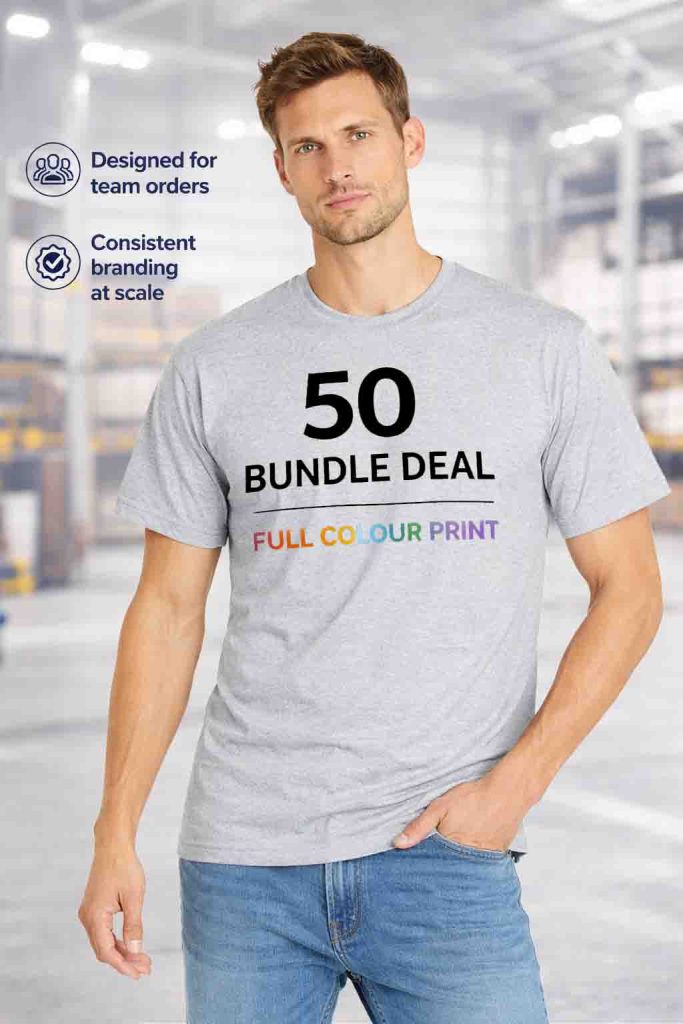
| 50 | Small groups or short runs | Full Colour | Lower upfront commitment | Small teams, test runs |
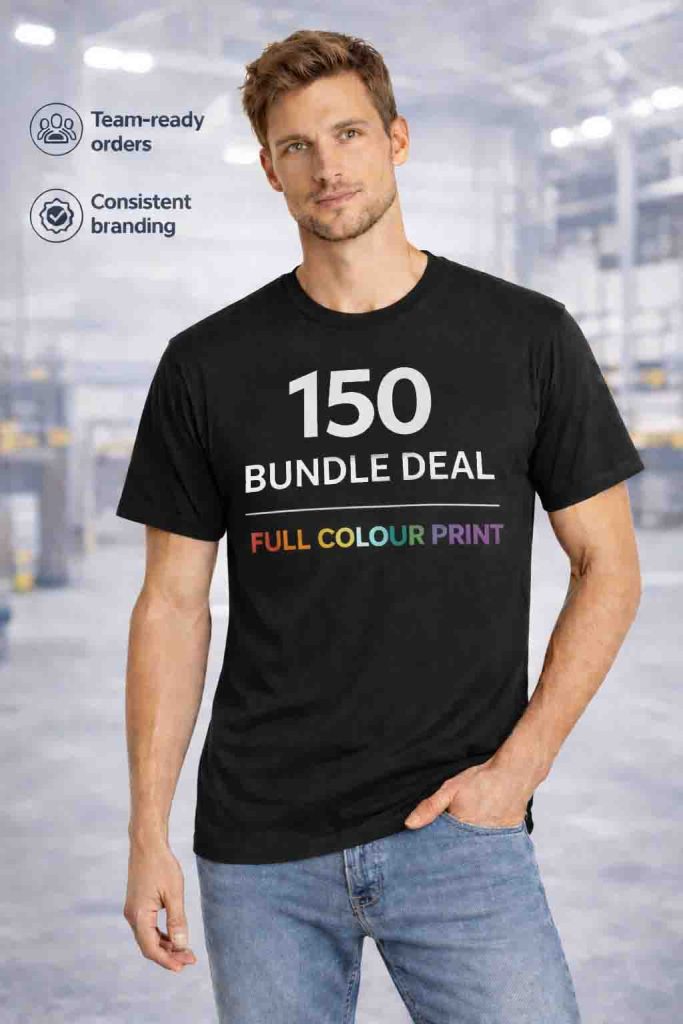
| 150 | Most common orders | Full Colour or Screen Print | Best balance of cost and flexibility | Teams, events, business use |
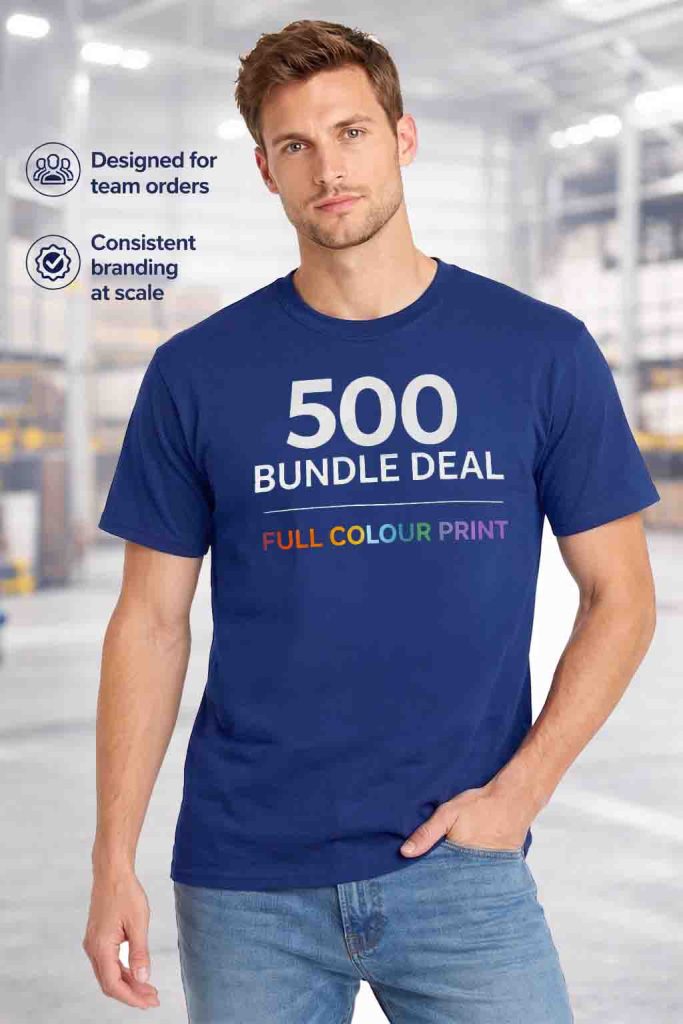
| 500 | Larger distribution | Screen Print | Lower cost per unit | Promotions, events, merchandise |
| 1000 | High-volume production | Screen Print | Maximum cost efficiency | Resale, wholesale |
Quick Recommendation
If you are unsure, 150 T-shirts with full colour printing is the most practical starting point. It gives you flexibility without committing to high volumes.
If you are planning to order 500 or more and your design is simple, screen printing will usually give you better cost efficiency.
Step 1: Choosing the Right Quantity
Quantity is the single biggest factor in any bulk order. It influences cost, production efficiency and how usable your T-shirts are once they arrive.
Bulk pricing improves as quantity increases because certain elements of the process do not scale in the same way as the number of garments.
These include:
- Artwork setup
- Machine preparation
- Production handling
When these are spread across more units, the cost per T-shirt drops. This is why choosing the right quantity is more important than focusing only on total spend.
50 T-Shirts
This is the entry point for bulk ordering. It works well for smaller groups or short-term use.
It is commonly used for:
- Small teams
- Trial designs
- One-off events
The flexibility is useful, but the cost per unit is higher than larger orders. This makes it a practical option when quantity is limited rather than when efficiency is the priority.
150 T-Shirts
This is the most commonly chosen quantity because it balances cost and usability.
It works well for:
- Full teams
- Medium-sized events
- General business use
At this level, the cost per unit becomes more efficient while still allowing flexibility in sizes and colours.
500 T-Shirts
At 500 units, the focus shifts from flexibility to scale.
It works well for:
The cost per unit reduces further, making it a strong option when T-shirts are being distributed widely or sold.
1000 T-Shirts
This level is designed for high-volume production.
It is typically used for:
- Resale
- Wholesale
- Multi-location distribution
At this point, the order becomes part of a broader strategy. The lower cost per unit allows for better margins and more consistent supply.
Step 2: Choosing the Right Print Method
Once your quantity is defined, the next decision is how your design will be applied to the garment.
The print method affects cost, appearance and how well the design performs over time.
Screen Printing
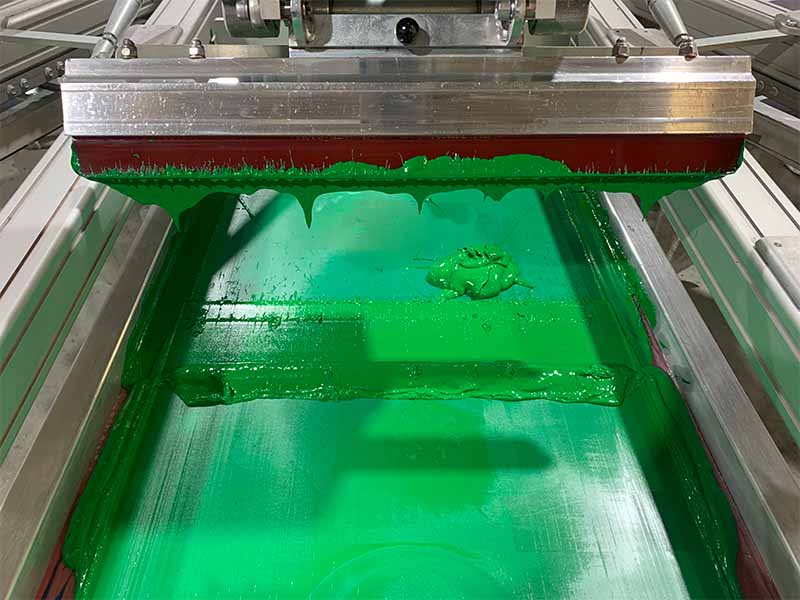
Screen printing is built for consistency and efficiency at scale. Ink is applied through a mesh screen, creating a solid and durable print.
It is best suited to:
- Simple, bold designs
- Limited colour palettes
- Larger order quantities
Because each colour requires its own setup, keeping the design simple helps control costs. This makes screen printing the preferred choice for merchandise and large campaigns.
Full Colour Printing
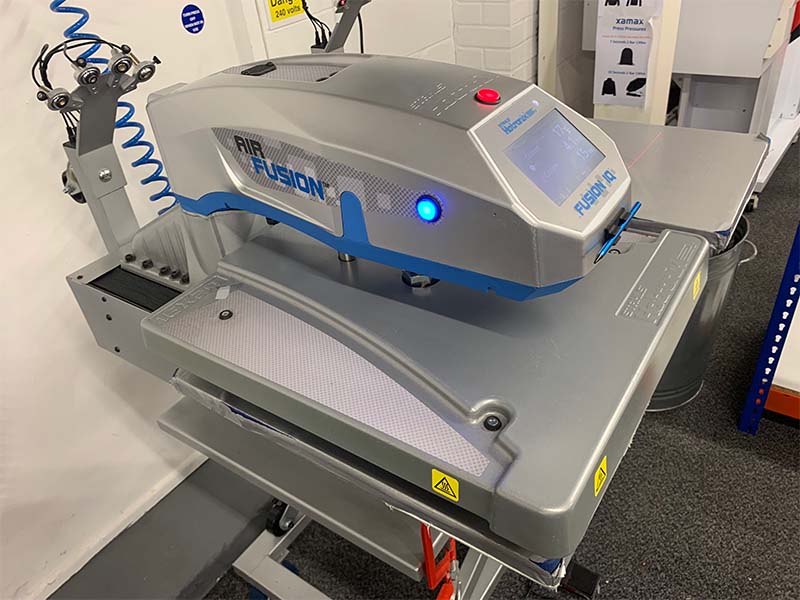
Full colour printing allows detailed designs to be reproduced without simplification. It is ideal for artwork that includes gradients, shading or multiple colours.
It is best suited to:
- Detailed logos and graphics
- Smaller or mixed orders
- Branding that must remain exact
It offers flexibility across different quantities, making it a practical choice for many business and event applications.
Matching Quantity and Print Method
The most efficient orders combine the right quantity with the right print method.
A simple framework is:
- 50 to 150 units → Full colour printing
- 150 to 500 units → Depends on design, but generally Full colour
- 500 units and above → Screen printing
This ensures that the production method supports both the design and the scale of the order.
Choosing the Right T-Shirt
The garment itself is just as important as the print. In bulk orders, consistency across all units is essential.
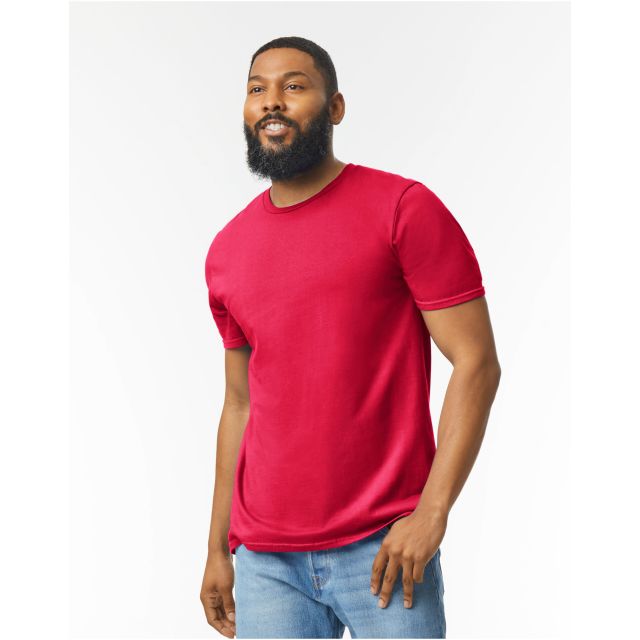
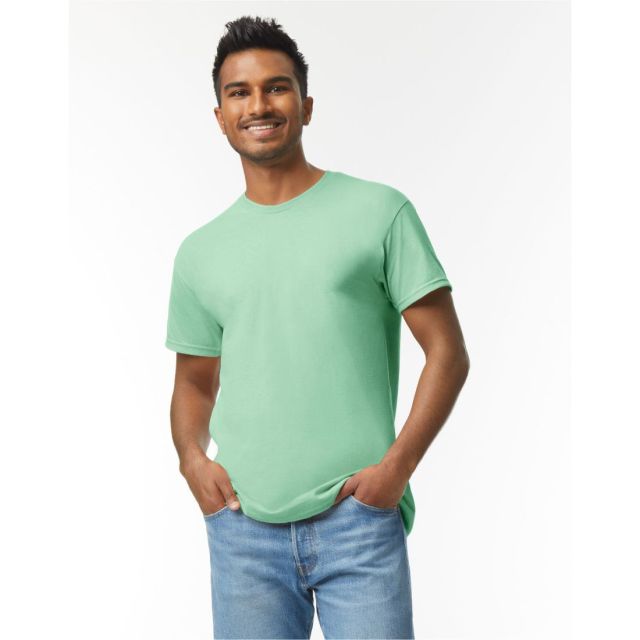
The Gildan 3000 Heavy Cotton T-Shirt is widely used because it offers a dependable balance of cost, comfort and print performance.
- Lightweight and suitable for most users
- Consistent sizing across large runs
- Reliable surface for both screen and full colour printing
Using a proven garment reduces the risk of variation across the order.
Design and Placement Considerations
The design needs to work in real-world conditions, not just on screen.
Focus on:
- Clear, readable graphics
- Strong contrast between print and fabric
- Placement that remains visible when worn
Common placements include:
- Front for visibility
- Back for impact
- Left chest for professional branding
The choice of placement should reflect how the T-shirts will be used.
Fabric, Fit and Comfort
Fabric choice affects comfort, durability and suitability for different environments.
- Cotton is breathable and widely used
- Polyester offers durability and moisture control
- Blends provide a balance of both
Fit also plays a role. A well-planned size range ensures that the T-shirts work across your entire group or customer base.
Planning Sizes Properly
Size planning is often overlooked but has a direct impact on how useful your order is.
- Medium and large as core sizes
- Smaller quantities of small and extra small
- Additional larger sizes as needed
For resale or merchandise, using past sales data is the most accurate approach. For teams, a balanced mix usually works well.
Ordering and Lead Times
Once your decisions are made, the ordering process is straightforward.
- Choose quantity
- Select garment and colours
- Upload your design
- Approve the artwork proof
- Production and delivery
Lead times vary depending on the order. Screen printing requires setup time, while full colour printing can be quicker for smaller runs.
Planning ahead ensures your order arrives when needed.
Sustainability and Responsible Choices
Many businesses now consider environmental impact when ordering.
Sustainable options such as organic cotton and recycled materials provide a way to reduce impact while maintaining quality.
Choosing these options can support broader business goals without affecting the final result.
Why Businesses Choose XAMAX®
XAMAX® works with businesses across the UK to deliver consistent, high-quality custom T-shirts.
- Reliable print quality
- Flexible bulk ordering
- Practical guidance at every stage
- Consistent results across large runs
The focus is always on delivering a product that works in practice, not just in theory.
Frequently Asked Questions
What is the minimum order for custom T-shirts?
Bulk orders typically start at around 50 T-shirts. Smaller quantities are possible, but they are less cost-effective compared to bulk production.
What is the best print method for bulk T-shirts?
The best method depends on your design and quantity. Full colour printing works well for detailed designs, while screen printing is more efficient for larger orders with simpler artwork.
How long does it take to produce custom T-shirts?
Production time depends on the size and complexity of the order. Most bulk orders take around one to two weeks once the artwork has been approved.
Can I mix sizes and colours in a bulk order?
Yes. Bulk orders allow you to mix sizes and garment colours, as long as the total quantity matches the bundle you are ordering.
What is the most cost-effective quantity to order?
Larger quantities reduce the cost per unit. For most customers, 150 T-shirts offers a strong balance between cost and flexibility, while 500 or more provides better efficiency.
What is the best T-shirt for bulk printing?
The Gildan 3000 Heavy Cotton T-Shirt is commonly used for bulk printing because it offers consistent sizing, reliable print results and a lightweight feel suitable for most users.
What to Do Next
If you already know your quantity and print method, the next step is to choose the right bundle and place your order.
If you are still deciding, focus on:
- How many T-shirts you need
- How your design should be printed
Once those decisions are clear, the rest of the process becomes simple and predictable.

Production Manager at Xamax Clothing Company Ltd
With 25 years of experience in garment decoration and production, Clare Killey is a true expert in screen printing, transfer printing, and embroidery for workwear, corporate clothing, and promotional apparel.
Latest posts by Clare Killey (see all)
- Band Merchandise 101: Designing T-Shirts for Merchandise - 28th November 2024
- Wholesale T-Shirts for Retail Resale: A Guide for Shops and Boutiques - 28th November 2024
- Branding T-Shirts as Workwear: Practical and Cool Solutions for Summer - 28th November 2024