
Need some advice?
Hi-Vis Trousers: Choosing the Right Pair for Your Workforce
Hi-vis trousers need to meet the required visibility specification while allowing staff to sit, walk, lift and carry out their normal tasks. The right pair also needs to work with the upper-body clothing, footwear and any other protection worn during the shift.
Compare our hi-vis trousers once you have the required standard, class and working conditions. You can then shortlist suitable styles, trial the complete outfit and agree the sizes and quantities for your team.
- Page Contents
- Start with the purchasing brief
- Check the garment and outfit class
- Choose a practical trouser style
- Trial the fit and leg length
- Match weather and other protection
- Confirm your logo options
- Plan care and replacements
- Build your team order
Start With the Purchasing Brief
Record where staff work, the vehicle movements and lighting conditions, and any employer, client or site clothing requirements. Include indoor workplaces and logistics yards alongside roadworks and construction sites.
Describe what each wearer actually does. Drivers need to sit comfortably with their pocket contents in place and get in and out of vehicles. Warehouse teams may spend much of the day walking, bending and handling stock. Maintenance staff may need tool storage and an appropriate knee-pad combination.
Your initial brief should identify:
- The required visibility standard and class.
- Any specified colour or sector requirements.
- The upper-body garments that will be worn with the trousers.
- Any separate requirements for rain, cold, flame or other hazards.
- The movements, storage needs and cleaning arrangements for the role.
Rail work can introduce a specification such as RIS-3279-TOM. Check the actual contract requirements and the documentation for the proposed colour and garment. Choosing orange fabric alone does not establish suitability.
Use HSE's PPE selection guidance when considering wearer fit and compatibility. Give your supplier the job requirements so the shortlist can be checked against them.
Check the Garment and Outfit Class
Read the label, product information, instructions and declaration of conformity for the exact style you intend to order. Confirm the performance of the relevant colour, size and configuration.
Reflective details on a work trouser do not, by themselves, establish an EN ISO 20471 class. Check the finished garment's declared performance rather than judging it from a photograph or counting its reflective bands.
Our hi-vis clothing classes guide explains Class 1, Class 2 and Class 3. The hi-vis standards guide covers the wider marking and documentation checks.
When Your Brief Says Class 3
Confirm whether the requirement refers to the complete outfit and which garments must be worn together. A trouser can form part of a documented combination with a higher class than the trouser alone.
Record the specified upper and lower garments and follow the wearing instructions. Matching colours or buying two items from the same range does not automatically establish the outfit's class. Check proposed substitutions before approving a repeat order.
Choose a Practical Trouser Style
Once the visibility requirement is established, compare how the suitable garments will be used.
| Trouser option | Useful comparison | What to check in a wearer trial |
|---|---|---|
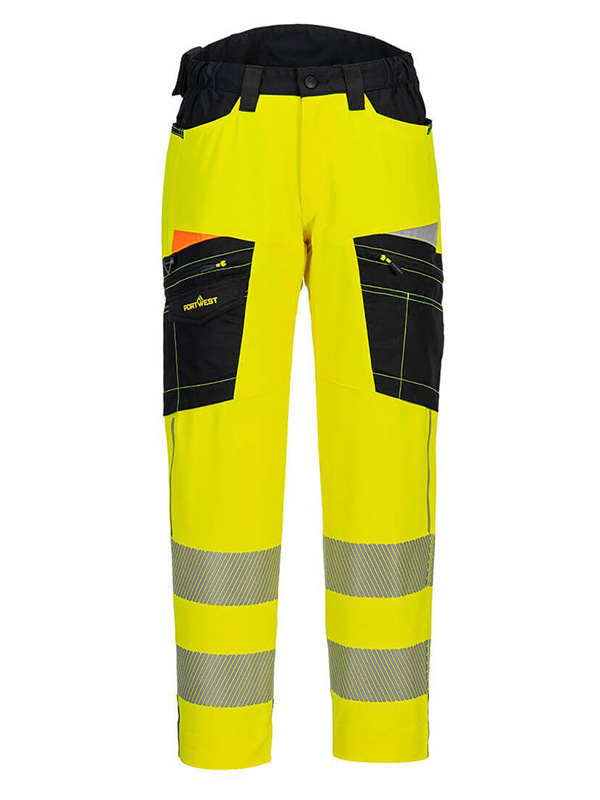
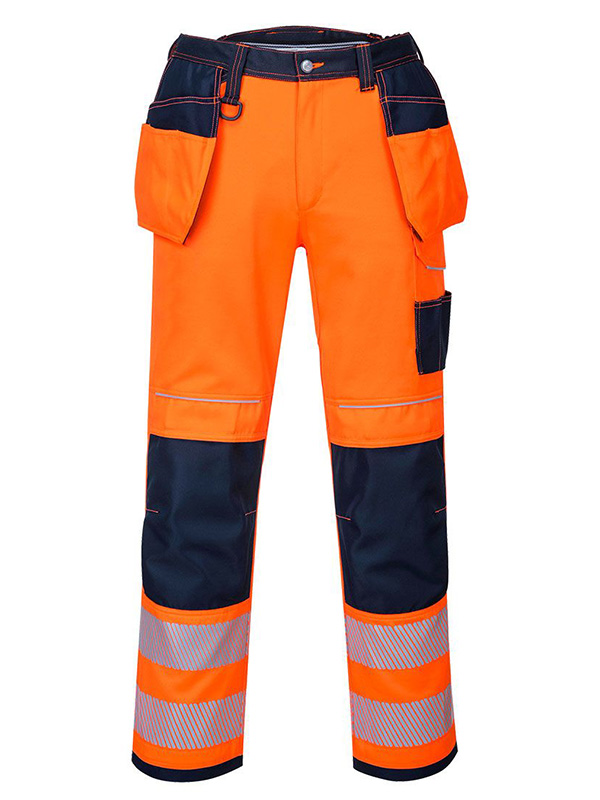
| Cargo or holster-pocket trousers | Storage for items used during the job | Pocket access, secure closures and loaded pockets when bending or sitting |
| Service or stretch trousers | Movement and comfort through an active shift | Fit through the waist, seat, thighs and knees during the actual tasks |
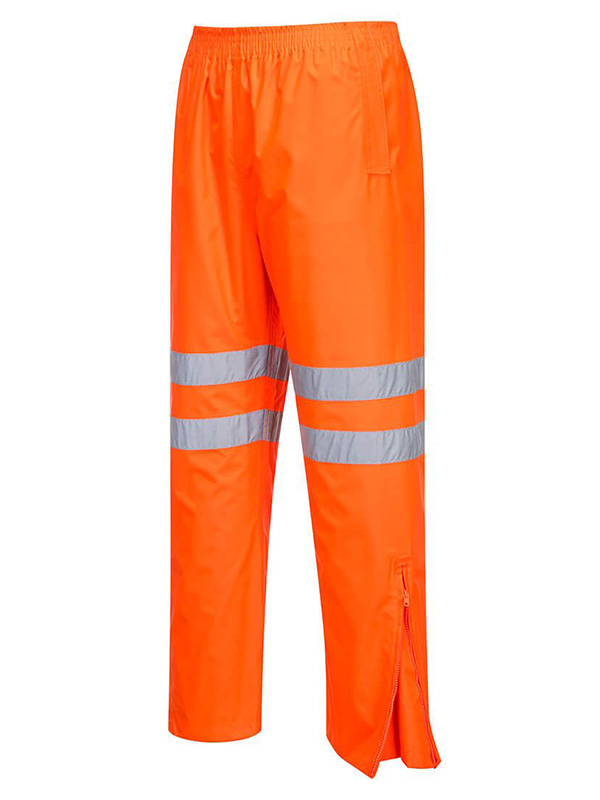
| Rain trousers or overtrousers | An additional wet-weather layer, or a model intended for normal wear | The intended garment format, fit over layers and boots, and access to clothing underneath |
| Lined or insulated trousers | Additional warmth for colder duties | Activity level, bulk, available movement and any separately declared weather protection |
A useful pocket arrangement for standing maintenance work may be uncomfortable in a driving seat. Trial the shortlisted garments with the items staff normally carry, rather than selecting by the largest pocket count.
For kneeling work, confirm the specified trouser and pad combination. Check that the insert remains correctly positioned during the task. Reinforcement or a pad pocket alone does not establish the performance of a complete knee-protection system.
Trial the Fit and Leg Length
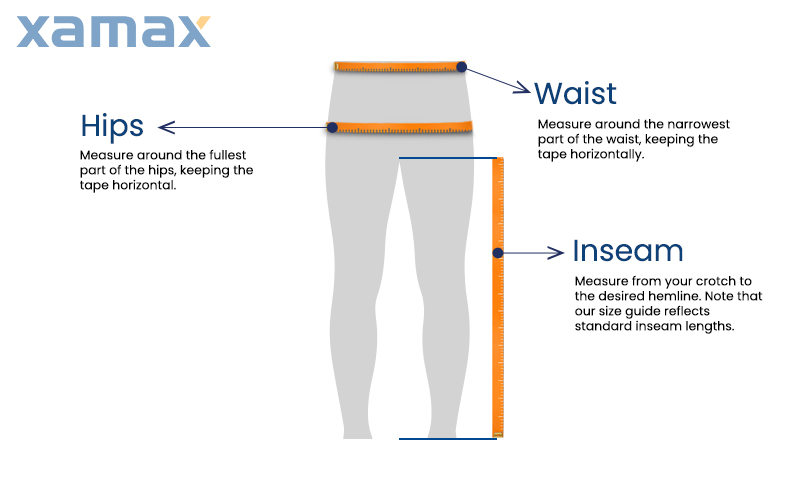
Collect measurements using the selected model's size guide. Include waist, hip and leg-length information where provided, and compare the available women's, men's or unisex cuts according to each wearer's fit needs.
Staff can wear different suitable cuts within a coordinated uniform. Confirm the declared performance of each selected version as well as its colour match.
Trial the trousers with the normal upper-body clothing, footwear, belt, layers and equipment. Check:
- Sitting and driving: the waistband, seat and pocket contents remain comfortable.
- Bending, crouching and stepping up: the garment allows the required movement.
- Walking: the leg length works with the footwear without dragging or creating a snagging problem.
- Kneeling, where required: the specified pad is positioned correctly in the intended pocket.
- Layering: overtrousers fit over the clothing underneath and can be put on as intended.
- Wearing the complete outfit: required visible material remains exposed, with closures and adjustments used as instructed.
Choose the correct leg length or use the manufacturer's supplied adjustment features as directed. Refer proposed alterations to the manufacturer, particularly where they could change visible material or band placement. Avoid solving poor fit by rolling up the legs.
Match Weather and Other Protection
Visibility, waterproofing and insulation are separate properties. An everyday hi-vis trouser may have a water-repellent finish without being a waterproof rain garment.
For wet work, compare the stated rain protection, seam construction, openings and breathable performance. Establish whether the model is intended to replace the everyday trousers or be worn over them. Check how the chosen jacket and trousers work together when staff bend and reach.
Plan the outermost layers carefully. A plain rain layer worn over hi-vis clothing can cover the material needed for visibility. The final outfit must meet the purchasing requirement in the way it will actually be worn.
For colder duties, assess the warmth needed alongside activity levels and the intended layers. Our outdoor work clothing guide covers the wider outfit.
Keep any specialist protective requirement explicit. Hi-vis classification does not establish protection against flame, chemicals or other hazards. Confirm the required performance of each layer and its compatibility with the rest of the equipment.
Confirm Your Logo Options
Decide whether the trousers need a logo or whether an approved position on an accompanying top provides the company identification you need.
For suitable non-FR trousers supplied by XAMAX®, agree the proposed method, dimensions and position before approving the finished order. Pockets, seams, stretch panels and waterproof construction can affect the available options.
Check the proposal against the garment's visibility requirements and the manufacturer's instructions. Keep the required reflective material and background area available, and confirm that the finished garment will retain the required performance. A large clear panel is not an automatic approval for a large logo.
A Free Digital Sample helps you review the proposed logo appearance and position. Confirm garment performance through the relevant product documentation and application checks, with a separate trial for wearer fit.
XAMAX® does not print onto flame-resistant clothing. If flame resistance forms part of the brief, agree the complete garment specification separately before making any branding decision.
Plan Care and Replacements
Choose garments whose cleaning instructions fit the routine you can provide. Check the permitted washing and drying processes, any stated cleaning limits, and requirements for decoration or protective features.
Agree who inspects the trousers and how defects are reported. Include damaged or obscured reflective material, heavy soiling, worn fabric, failed fastenings and damaged seams in the checks relevant to the selected garment.
HSE's PPE maintenance guidance explains the importance of keeping reusable equipment clean, in good condition and properly stored. Staff need access to suitable replacements while garments are being cleaned or have been taken out of use.
Set issue quantities around shifts, how quickly garments become soiled, laundry turnaround and drying time. For example, twelve wearers issued two pairs each require 24 pairs, before separately agreed spares. The allowance should follow the actual working arrangements.
Keep the approved product codes, colours, cuts and leg lengths with the order record. If a model or size becomes unavailable, check the alternative against the same visibility, fit and outfit requirements.
Build Your Team Order
Use a brief that can be checked and quoted consistently:
| Include in the order | Details to record |
|---|---|
| Required performance | Visibility standard/class, colour and any client or sector specification |
| Outfit combination | Specified trouser and upper-body models, with relevant wearing instructions |
| Working conditions | Tasks, movement, time outside, weather and any other protective requirements |
| Wearer fit | Agreed product, cut, size and leg length following the trial |
| Quantities | Pairs by size and any separately identified spares |
| Logo, if suitable | Approved method, position and artwork dimensions |
| Care and replacements | Cleaning arrangements, inspection and repeat-order details |
Compare our hi-vis trouser range, then contact XAMAX® by phone or message to discuss suitable models and team quantities.
For a wider clothing order, our hi-vis workforce guide brings together garment types, layering, branding and ordering.

Latest posts by Andy (see all)
- How to Choose Office Trousers for Staff Uniforms - 20th November 2026
- Hi-Vis Trousers: Choosing the Right Pair for Your Workforce - 20th November 2026
- How to Choose Work Trousers for Your Team - 20th November 2026