
Need some advice?
How to Choose Knee Pads for Work: Inserts, Fit and Trouser Compatibility
Knee pads for work need to suit the task, the surface and the person using them. If they fit inside work trousers, the pad and garment also need to work together in the way the manufacturer specifies.
Compare our knee pads and kneeling pads once you have identified the protection required. Check the intended use, documentation, fit and cleaning arrangements before ordering for the team.
- Page Contents
- Start with the kneeling task
- Compare inserts, external pads and kneeling mats
- Check standards and declared performance
- Confirm pad and trouser compatibility
- Trial the fit in working positions
- Plan inspection, cleaning and replacement
- Build your team's knee-protection order
Start with the Kneeling Task
Identify who needs to kneel, where the work takes place and how often they move between kneeling, standing and walking. This can include flooring, installation, building maintenance, facilities work and other duties carried out near floor level.
Record the surfaces involved and any additional hazards, including moisture, debris or substances used in the process. Smooth indoor flooring and an outdoor maintenance area can require different selection checks. A job title alone does not establish the right product.
Also consider how the work could involve less kneeling. HSE's lower-limb guidance includes changing working methods, using suitable aids and planning breaks or task rotation. Knee protection forms part of that work plan.
Where a risk assessment identifies a need for PPE, HSE explains that the employer must provide it free of charge, with appropriate instructions. Include short tasks in the assessment; a job taking only a few minutes does not remove its protection requirement.
Compare Inserts, External Pads and Kneeling Mats
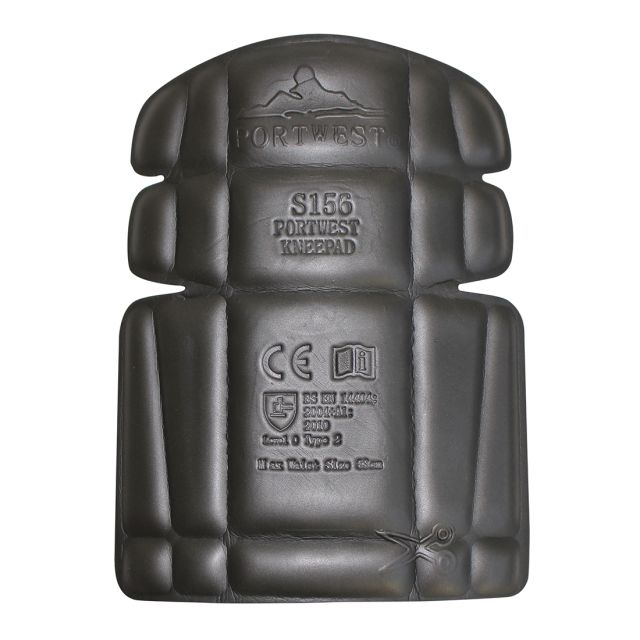
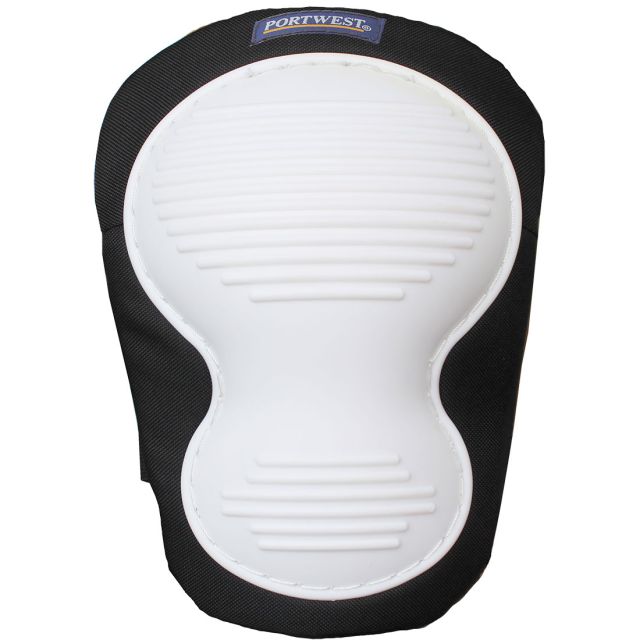
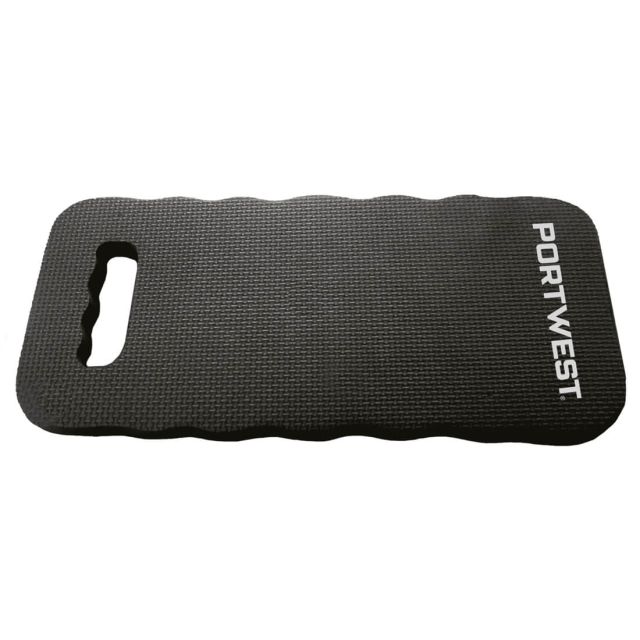
The way knee protection is held in position affects how it works with clothing and movement. These are three formats to compare against the task:
| Format | How it is used | Buying checks |
|---|---|---|
| Trouser-pocket inserts | Pads sit inside the garment's designated knee-pad pockets | Declared pad/garment compatibility, pocket dimensions and positioning, wearer fit and care instructions |
| External knee pads | Pads are secured around the leg using the product's fastening system | Adjustment range, position when kneeling, interaction with clothing, movement and the surface requirements |
| Kneeling mats or pads | A separate pad is placed on the working surface | Declared intended use and protection, usable area, stability, carrying and repositioning between tasks |
The format is one part of the decision. Foam, gel, outer shells and product thickness are features to compare alongside the declared performance and wearer trial. Their presence does not establish suitability for every surface or hazard.
A separate mat also needs to be available at the point of use and moved when the working position changes. An external pad needs to remain correctly positioned as the wearer moves. An insert depends on both the pad and the garment holding it where required.
Do not assume that a general cushioning mat has the protective performance required for the work. Check the exact product information before including it in a PPE specification.
Check Standards and Declared Performance
Check the product marking, declaration of conformity and user instructions. Record the full standard reference, declared performance level, intended conditions and limitations. A product name containing “knee pad” is insufficient evidence of the protection it provides.
The 2024 EN 14404 series separates several arrangements:
| Standard reference | Arrangement covered |
|---|---|
| EN 14404-2:2024 | Wearable knee protectors, type 1 |
| EN 14404-3:2024 | Individual combinations of knee pads and garments, type 2 |
| EN 14404-4:2024 | Interoperable knee-pad and garment systems, type 2 |
| EN 14404-5:2024 | Knee mats, type 3 |
These references describe different arrangements; the part numbers are not a scale of protection. Check the performance information within the documentation for the actual product or system.
Some current manufacturer listings still refer to EN 14404:2004+A1:2010. Ask for the applicable declaration and instructions for the item being supplied, and resolve any conflicting description before approving it. The date or a brief catalogue badge cannot establish suitability on its own.
Additional hazards need their own checks. For example, ordinary cushioning does not establish protection against wet cement. HSE's cement guidance addresses the clothing and protection needed for work involving wet cement, including kneeling.
Confirm Pad and Trouser Compatibility
Will any knee-pad insert fit any work trousers? Check both the physical fit and the manufacturer's declared compatibility. An insert fitting into a pocket does not, by itself, establish the protective performance of the combination.
For an individual combination, confirm the specified pad and garment references. Where the documentation permits pads and garments to be interchanged within an interoperable system, follow its stated pad and pocket requirements. A shared brand name or similar-looking pocket is insufficient to confirm either arrangement.
Before buying inserts, establish:
- The exact trouser or coverall model and relevant size or length options.
- The permitted pad model or documented system requirements.
- The required insertion direction, orientation and pocket closure.
- Any approved position adjustment within the pocket.
- The cleaning instructions for both the pad and garment.
Check the garment fit as part of that pairing. A pocket in the wrong position on the wearer cannot be corrected simply by choosing a thicker insert. Use only the adjustment and fitting methods allowed by the manufacturer.
Do not trim, reshape or alter protective equipment to make it fit. If the proposed combination cannot be confirmed, choose a documented alternative before placing the full order.
Our work-trouser buying guide covers the wider garment decision, including cuts, leg lengths and other working requirements. Keep knee-pad compatibility in the brief while comparing those options.
Trial the Fit in Working Positions
Involve the people who will use the protection. HSE's PPE selection guidance highlights the importance of wearer size, fit and compatibility with other equipment.
Trial the selected arrangement with normal work clothing, footwear and equipment, following its instructions. Use representative movements and a suitable, controlled trial area.
| Trial check | What to assess |
|---|---|
| Standing and walking | Whether pads stay in the intended position and allow the required movement |
| Moving into a kneeling position | Whether the protector reaches and covers the knee as intended |
| Working while kneeling | Position, stability and comfort in the actual working posture |
| Standing up and moving again | Whether the protection shifts or needs repeated adjustment |
| Using other clothing or equipment | Any interference from trouser layers, boots, straps or equipment worn for the task |
For inserts, assess the complete pad-and-garment arrangement on each wearer. For external pads, check the fastening range and follow the instructions for positioning and tension. For a mat, check that its working area and repositioning suit the task.
Record fit problems and review the choice before issuing it across the team. A product labelled one size still needs to be checked on the people who will use it.
If work shorts are permitted for a role, assess knee protection as a separate requirement. A trouser-pocket insert needs its specified supporting garment; an external pad must be suitable for the actual clothing and task. Workplace rules on leg coverage still apply.
Plan Inspection, Cleaning and Replacement
Keep the manufacturer's care instructions available to staff. An insert, an external pad and a kneeling mat can have different cleaning requirements, and those may differ from the trousers worn with them.
Check whether inserts must be removed before laundering the garment. Follow the permitted cleaning and drying methods for each item. Do not assume that a washable trouser means its pads can remain inside for the same programme.
Agree who will check the equipment and how defects will be reported. Inspect pads, fastenings and relevant garment pockets for damage, deterioration or contamination, following the product instructions. Check that the protector can still be held and used correctly.
Follow the manufacturer's replacement criteria and keep suitable replacements available. HSE's maintenance guidance covers cleaning, storage, correct replacement parts and reporting defects. Remove defective equipment from use and arrange an appropriate replacement.
Keep approved pad and garment codes in the issue record. When either changes, confirm compatibility again before treating the new item as an equivalent replacement.
Build Your Team's Knee-Protection Order
Give your supplier the task, working surface, required performance and relevant clothing details. Confirm the approved product or system, wearer fit, issue quantity and spare provision, together with its inspection and cleaning arrangements.
Check the sales unit before calculating quantities. A listing may describe a pair of pads, an individual item or a larger pack; record what each order unit contains so the issue quantity is correct.
Browse our knee pads and kneeling pads, then contact XAMAX® by phone or message to discuss the shortlist and quantities. For inserts, include the exact garment details so compatibility can be checked before the team order is confirmed.

Latest posts by Andy (see all)
- How to Choose Knee Pads for Work: Inserts, Fit and Trouser Compatibility - 23rd November 2026
- How to Choose Office Trousers for Staff Uniforms - 20th November 2026
- Hi-Vis Trousers: Choosing the Right Pair for Your Workforce - 20th November 2026