








Need some advice?
The Ultimate Guide to Fleece Jackets: Materials, Benefits, and Uses
A fleece jacket earns its place in a work uniform by providing useful warmth without making the job harder. The right choice lets your team move comfortably, works with their other layers, and carries your logo clearly. Getting those decisions right takes more than choosing a colour and a fabric weight.
This guide explains how fleece works, the differences between common fleece types, and what to look for when buying for a workforce. It also covers weather protection, embroidery, care and hi-vis requirements, so you can turn a shortlist into a suitable order.
- Page Contents
- What fleece is and how it works
- Microfleece, polar, sherpa and performance fleece
- Warmth, fabric weight and weather protection
- Choosing fleece for different work environments
- Care, appearance and service life
- Hi-vis fleece and protective-clothing requirements
- Garment selection, logo approval and ordering
- Your fleece selection checklist
What Is Fleece and How Does It Work?
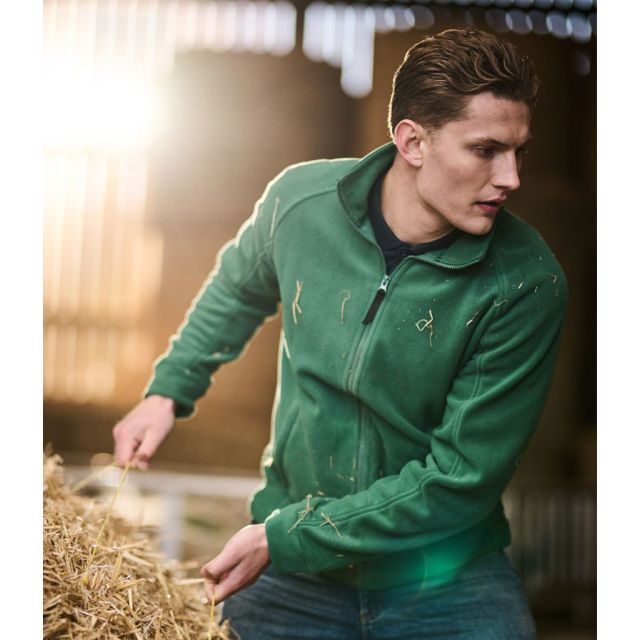
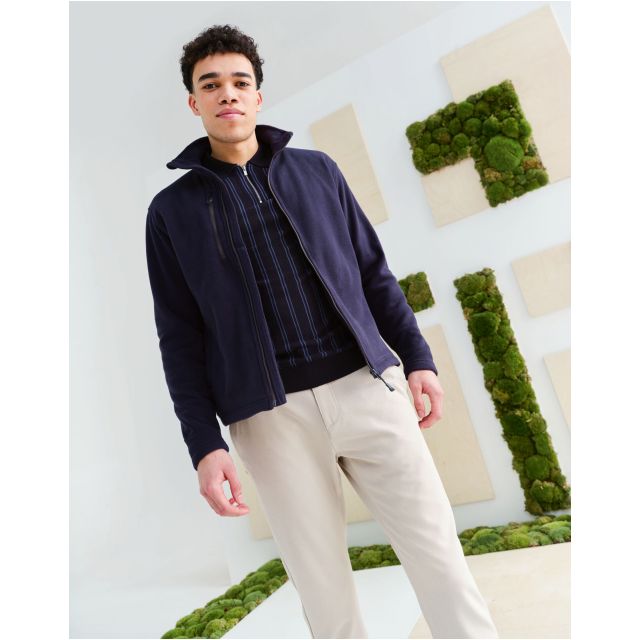
The fleece used in many work jackets is a knitted fabric with a raised, soft surface. Polyester is common, although blends and different constructions are available. The raised fibres create spaces that hold air, helping reduce heat loss from the wearer. The jacket provides insulation; it doesn't generate heat.
That construction explains both fleece's appeal and its limitations. It can provide warmth at a manageable weight, while allowing air and moisture to move through the fabric. In an exposed location, however, that same air movement can make an ordinary fleece feel less effective than it does indoors.
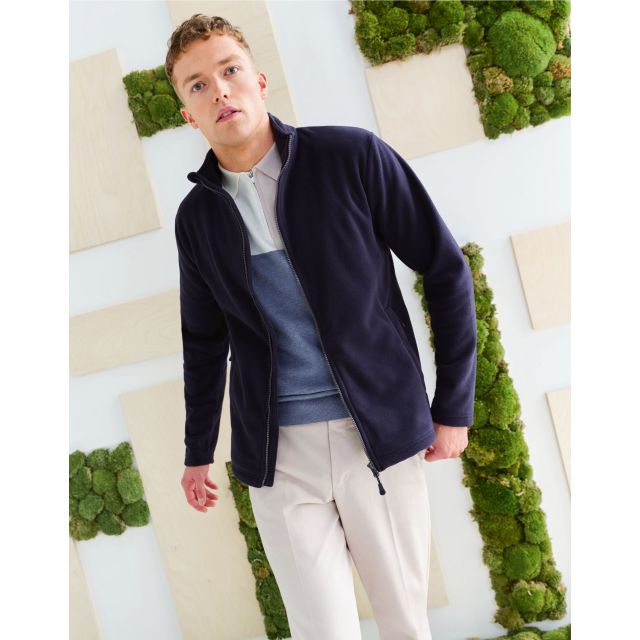
Start by deciding whether the fleece will be worn as an outer layer in sheltered conditions or as insulation beneath a separate jacket. Then consider the fabric, fit and features as one clothing system. A garment that works well over a polo shirt may be too restrictive over a sweatshirt or too bulky beneath a fitted waterproof.
Types of Fleece
Fleece descriptions tell you something about the material, but they aren't a universal grading system. Two jackets sold under the same broad name can differ in weight, stretch, surface texture and construction. Use the description to identify a suitable starting point, then compare the actual garments.
Microfleece vs. Polar Fleece: Differences and Uses
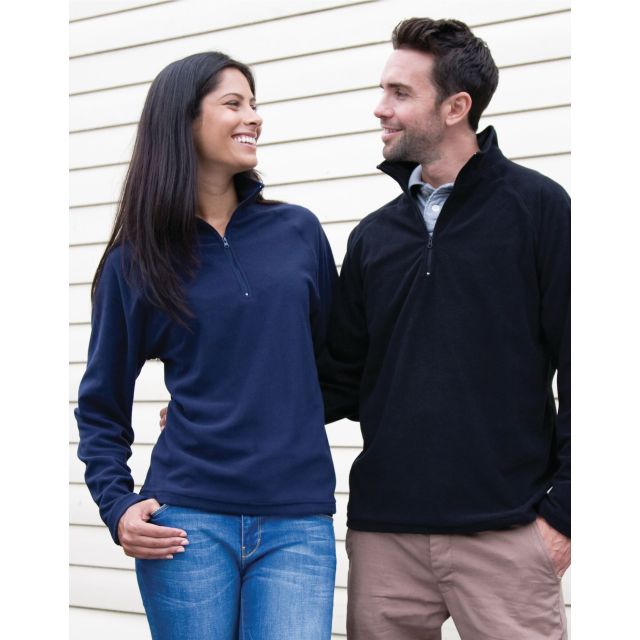
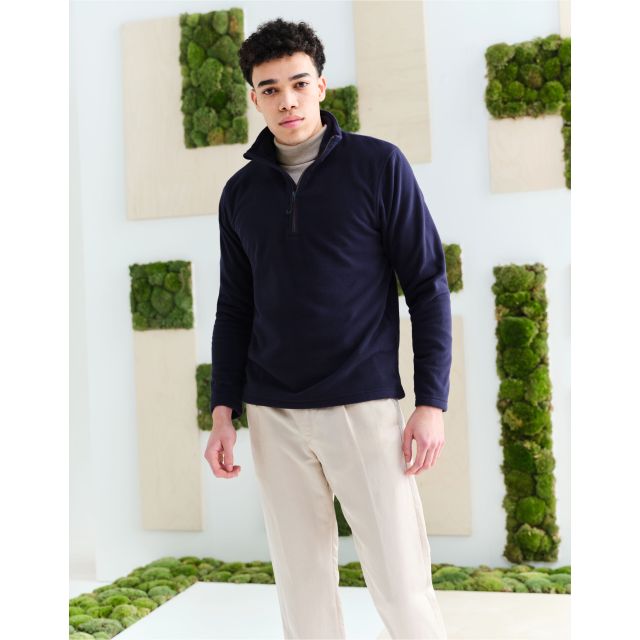
Microfleece usually describes a lighter fleece with a relatively fine surface. It is a useful starting point for staff who need a modest insulating layer, work actively, or wear their fleece beneath another jacket. Lower bulk can make a practical difference around the shoulders, elbows and collar when several layers are worn together.
Polar fleece is a broader description, covering different weights and constructions. It isn't automatically a separate, heavier category that always outperforms microfleece in cold conditions. The useful comparison is between the weight, loft and construction of the specific fabrics, followed by how the finished jackets fit.
For a warehouse team that moves continuously, a lighter fleece may be easier to keep on throughout a shift. For someone working at a relatively stationary service counter near an open door, a more substantial insulating layer may be preferable. Those are different briefs, even when both employees work in the same building.
Sherpa Fleece: Features and Benefits
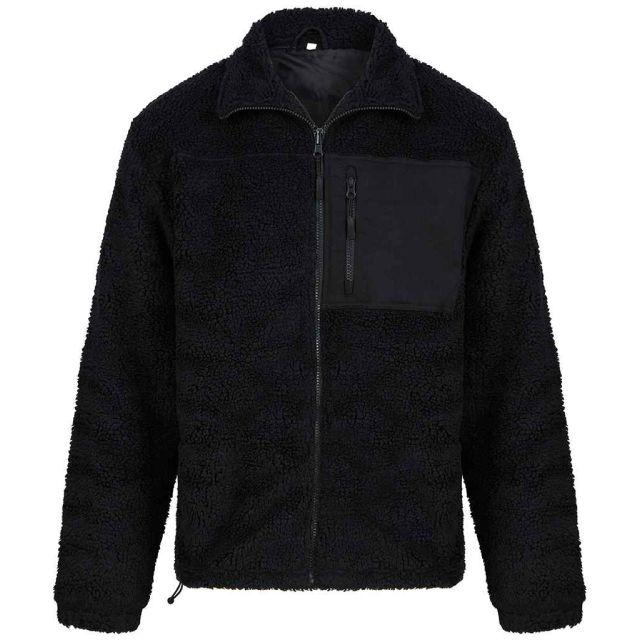
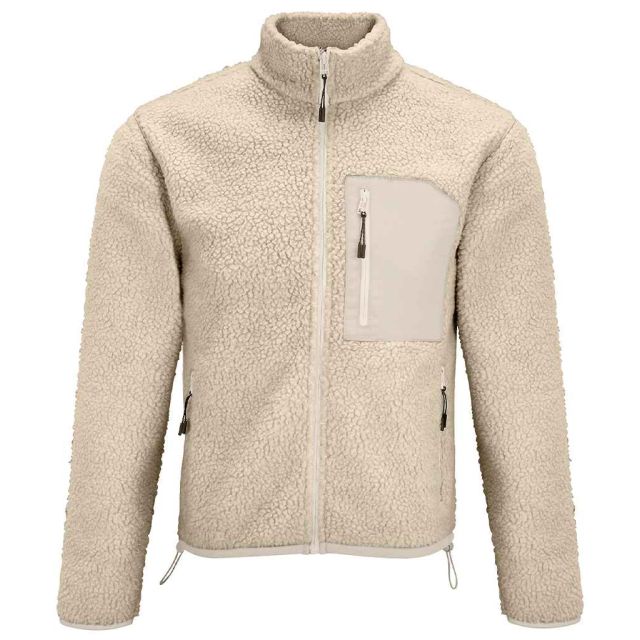
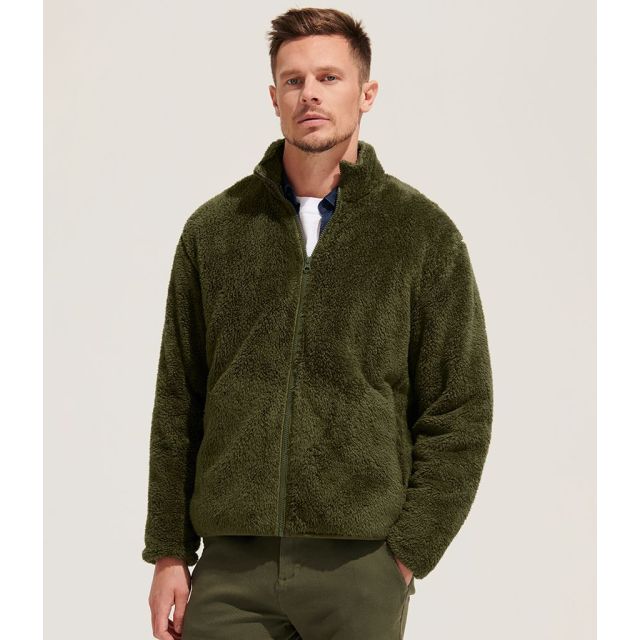
Sherpa fleece has a more pronounced, wool-like pile. It offers a distinctive textured appearance and can provide useful loft, but the feel of the surface doesn't establish a warmth rating. Look at the fabric specification and the whole garment, including any lining, rather than judging by how fluffy it looks.
For workwear, consider where that texture will sit against other clothing and equipment. A bulky fleece can be comfortable on its own yet awkward beneath a close-fitting shell. The surface also matters for your logo: fine lettering and small details can be less clear against a deep pile than on a smoother fabric.
Choose sherpa where the combination of insulation, appearance and fit suits the role. If detailed embroidery is important, assess the logo on the intended surface before committing to the garment.
Performance Fleece: For Active Work
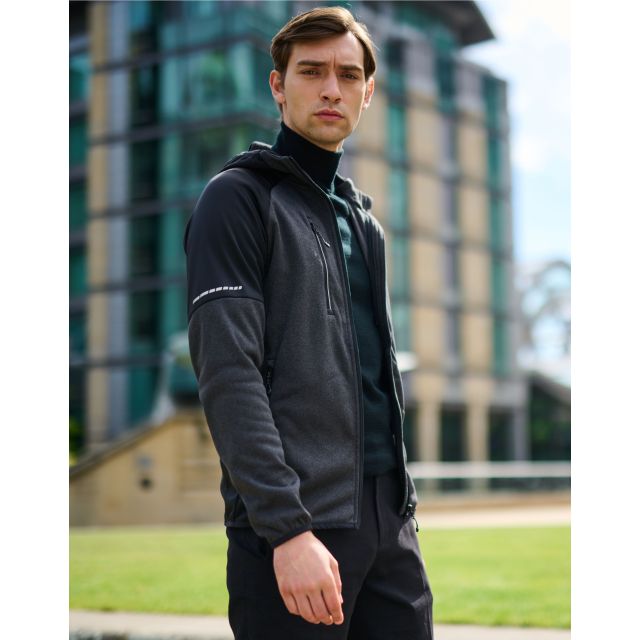
Performance fleece is a description that needs unpacking. It may refer to stretch, moisture management, a structured surface or a particular balance of warmth and weight. It doesn’t mean every garment sold under the description offers all those features.
Identify the job requirement first. A fitter who reaches overhead needs freedom through the back and shoulders. Someone moving between indoor and outdoor tasks may benefit from a layer that is easy to ventilate or remove. The relevant feature is the one that solves that problem, rather than the word "performance" on its own.
Where stretch is part of the construction, test movement in the finished jacket. Zips, seams, pockets and any applied logo also influence how it feels in use. A stretchy fabric doesn't compensate for an unsuitable cut or a restrictive size.
Recycled-Content Fleece
Recycled polyester can be used in several fleece constructions, so recycled content is a material attribute rather than a separate warmth category. A recycled microfleece and a recycled sherpa can still serve very different purposes.
When recycled content forms part of a purchasing brief, establish the percentage claimed for the exact product and which components it covers. A claim about the main fabric needn't cover the zip, trim, lining or embroidery. Keep the relevant supplier evidence with the order specification.
Compare suitability, durability and care alongside the content claim. For more on this topic, see our guide to sustainable fleece jackets.
Recycled content alone doesn't prove identical performance or a lower total environmental impact. A clear statement about a verified material is more useful than describing the whole uniform as sustainable without explaining the basis.
Warmth, Weight and Weather Protection
Warmth and Insulation: How Fleece Traps Heat
Fabric weight is commonly expressed in grams per square metre (gsm). It describes the mass of fabric over a given area. It doesn't tell you the weight of the whole jacket or provide a direct temperature rating.
For example, a 300gsm fabric has more mass per square metre than a 200gsm fabric. That doesn't establish exactly how much warmer the finished garment will be. Surface loft, knit construction, lining, fit and exposure to moving air all influence the result.
Use weight as a comparison tool, especially between similar constructions, rather than a rule that the highest number is best. Excess insulation can be inconvenient for active roles, while a light layer may be insufficient for a person who spends long periods standing in a cool area.
Breathability and Moisture Management
Breathability, air permeability and moisture management describe related but different properties. Air moving through a fabric can help release heat. Moisture transport (wicking) and drying depend on its fibres, construction and finishing, as well as the conditions in which it is worn.
For active work, assess the fleece with the normal base layer and outer jacket. A breathable fleece beneath an unsuitable outer layer won't determine the performance of the complete outfit. Equally, adding insulation won't solve discomfort caused by wearing more clothing than the task requires.
Lightweight Layers, Wind and Rain
A conventional fleece is primarily an insulating layer. Some specialised constructions offer additional wind resistance or water repellency, but ordinary fleece shouldn't be assumed to provide waterproof protection. Water repellency and waterproofness are different claims.
If wind exposure is a major part of the job, compare custom softshell jackets against the same brief. Look at the actual wind and rain protection declared for each option. A softshell label doesn't establish waterproof performance either.
For a fleece worn under a separate weather layer, try the garments together. Fasten both, reach forward and raise the arms. Look for compressed sleeves, restricted shoulder movement, an uncomfortable double collar and pockets that become inaccessible.
Pilling and Surface Appearance
Pilling is the formation of small balls of fibres on a fabric's surface, often where it rubs. An anti-pill finish is intended to reduce this effect; it isn't a promise that the jacket will remain unchanged throughout its working life.
Appearance matters in a customer-facing uniform, but it is only one part of durability. Assess the zip, seams, cuffs and pocket construction too. A fleece that still looks tidy needs functioning fastenings and a comfortable fit to remain useful at work.
Choosing Fleece for the Work Environment
Outdoor Work and Open-Door Sites
For outdoor tasks, separate the need for insulation from protection against wind, rain and other hazards. A fleece can be a useful mid-layer beneath a suitable outer jacket, or an outer layer in sheltered conditions. Decide which role it needs to fulfil before choosing its weight.
For loading areas, yards and open-door workshops, consider how often staff move between conditions and how active they are. A single heavy fleece for everyone can be less useful than a coordinated choice of suitable layers. Staff can keep a consistent uniform colour and logo while wearing a garment appropriate to their role.
| Working pattern | Useful starting point | What to assess |
|---|---|---|
| Active indoor or sheltered work | A lighter insulating layer | Freedom of movement and comfort throughout the task. |
| Cool indoor areas or stationary duties | More substantial insulation | Fit over the normal uniform and comfort over longer periods. |
| Regular indoor/outdoor movement | A fleece and suitable outer layer | Ease of adding layers, ventilation and pocket access. |
| Exposed or protective-clothing work | A complete clothing specification | Weather exposure, risk assessment and compatibility with required PPE. |
Everyday Workwear and Mixed-Use Uniforms
For office-to-warehouse roles, maintenance teams and customer-facing staff, examine the details people use repeatedly: zip access, collar height, sleeve length and pockets. A feature that looks minor in a product photograph can become an everyday irritation when the jacket is worn for hours.
Use the manufacturer's size chart, then assess fit on representative wearers over their normal uniform. Don't assume that the same labelled size fits identically across different brands or styles. The correct comparison is the finished fit and movement, not the letter on the label.
Compare custom fleece jackets using the work brief, then shortlist styles that meet it before finalising the logo and quantities.
Corporate and Team Apparel: Logo Suitability
Fleece is widely used for embroidered workwear because it can combine a useful everyday layer with a clearly identifiable company logo. The result depends on the relationship between the fabric surface and the design, rather than every fleece being automatically suitable for every embroidery.
On a raised pile, small stitches can disappear into the surface. Stretch and fabric stability affect how an embroidered area sits, while seams, pockets and garment construction can limit access to a proposed position. The design may need a different size, simplified detail or another suitable garment.
For practical guidance on preparing your logo and choosing its position, see our guide to fleece embroidery, logo placement and artwork. When asking for advice, send the actual logo and proposed garment together so they can be assessed as one job.
Fleece Care, Appearance and Service Life
Care is part of garment selection. Establish who will wash the fleeces and which process they need to use before ordering. A jacket that requires different treatment from the rest of the uniform may create extra handling, so the care specification needs to work in practice.
Use the garment label together with the instructions for the finished decoration. There isn't one wash temperature, drying method or ironing rule that suits every fleece. Follow the approved process rather than assuming that all polyester garments can be treated alike.
Pay attention to any instructions for detergents, washing with other items, fastening zips and drying. If a workplace uses commercial laundry, confirm that the garment and logo are suitable for that process; domestic washability doesn't establish industrial-laundry suitability.
Inspect appearance and function when planning replacements. Look at pilling, worn areas, damaged seams, zip operation and the condition of the logo. For protective garments, inspection and replacement also need to follow the manufacturer's instructions and the required protective performance.
Keep enough suitable garments available for the agreed laundry cycle. That helps staff use clean clothing without relying on a fixed calendar replacement rule. Actual service life depends on use, care and condition, not simply when the fleece was bought.
Hi-Vis Fleece Jackets: Selection and Safety
What Are Hi-Vis Fleece Jackets?
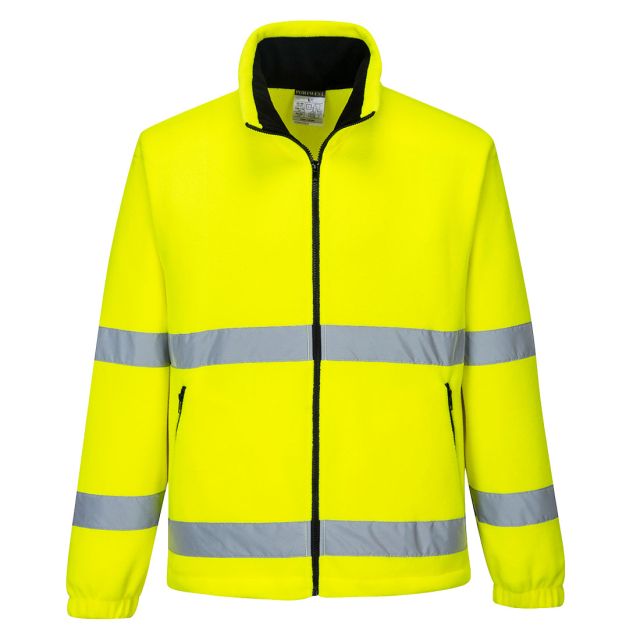
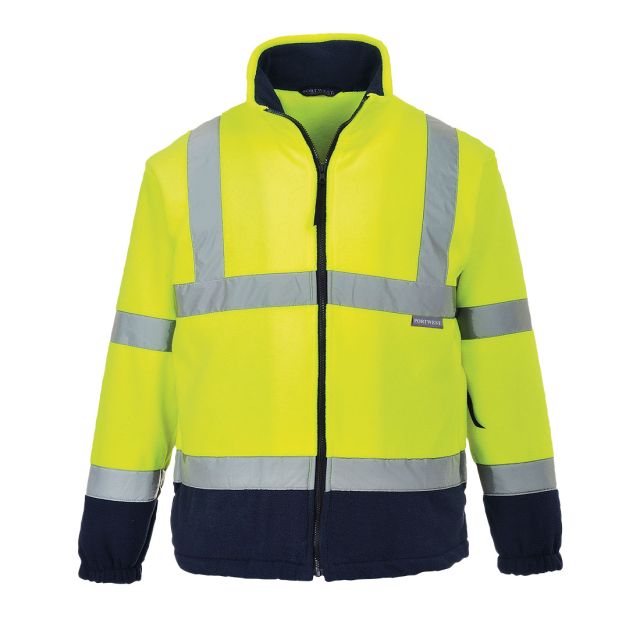
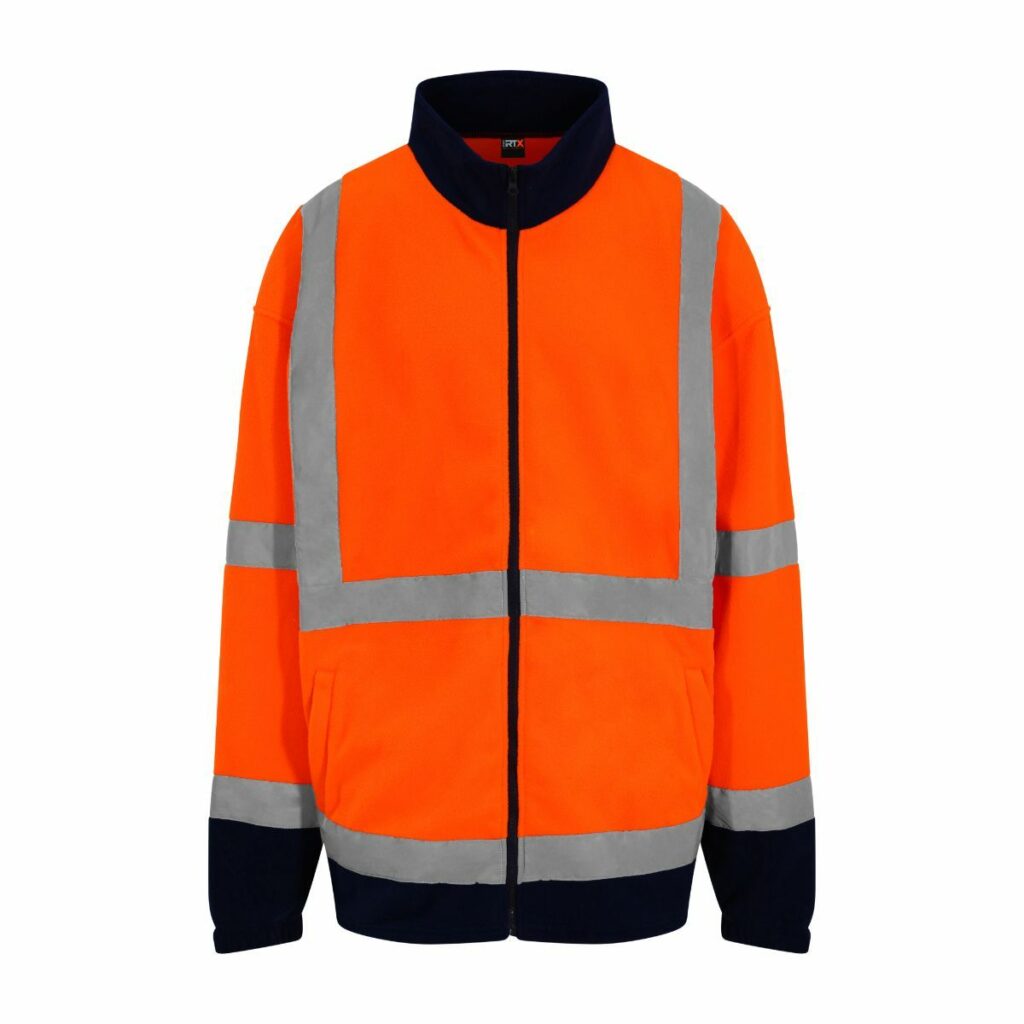
Where the risk assessment requires high-visibility clothing, insulation is only one part of the specification. A bright fleece or a product photograph doesn’t establish the required visibility performance.
Where EN ISO 20471 is specified, check the declared standard and class for the exact garment, colour, size and configuration. Our guide to EN ISO 20471 hi-vis clothing standards explains the requirements in more detail.
Select the fleece for the task and wearer, including compatibility with other clothing and PPE. Buying a garment that meets a product standard doesn't by itself establish that every workplace duty has been met. HSE’s PPE selection and use guidance explains the importance of suitable equipment, fit and compatibility.
Benefits of Hi-Vis Fleece Jackets
A suitable hi-vis fleece can combine an insulating layer with the required visibility performance. That can be useful when workers need warmth but don't need the same outer garment throughout the shift. Its suitability still depends on how the complete clothing arrangement is used. For more specific garment-selection advice, read our guide to choosing hi-vis fleece jackets.
Check whether another layer will cover fluorescent or retroreflective material. If a required class relies on a certified garment combination, use the specified combination and instructions. Removing or covering one layer can change the performance the remaining clothing provides.
Visibility performance doesn't establish protection from rain, flame or other hazards. Identify any additional protective requirements separately and select garments with the relevant declared protection. Follow the manufacturer's wearing, cleaning, inspection and replacement instructions.
Adding a Logo to Hi-Vis Fleece
Adding a logo must be considered alongside the garment's protective requirements. Ask us to assess the method, dimensions and positions against the manufacturer's current decoration instructions for the actual garments and sizes.
Decoration can cover visible material or affect other protective features. A logo position that is suitable on an ordinary fleece isn't automatically suitable on a hi-vis or other protective garment. A digital visual shows the proposed layout; it doesn’t establish PPE conformity.
Choosing and Ordering Fleece Jackets with XAMAX®
Start with the Garment and Its Use
Start your enquiry with the roles, conditions and other layers the team wears. Our guide to choosing custom fleece jackets for work uniforms helps you turn those requirements into a practical buying brief.
Include any protective-clothing requirements and the intended laundry process. This gives us a useful brief for comparing the garments, rather than selecting on price or fabric weight alone.
Shortlist the appropriate styles and colours before treating the logo as a finished specification. A logo that works clearly on a smooth microfleece may need a different treatment on a deeper pile. Resolving the garment and design together helps avoid agreeing an artwork layout that doesn’t suit the chosen surface.
Check the Logo at Its Production Size
Provide the clearest logo file you have, colour references, the intended size and the proposed position. Include any additional names or text. Fine lines, small lettering and dense detail need to be assessed at the size they will actually be embroidered.
For a logo we're embroidering for the first time, we'll provide a stitched swatch for approval on qualifying orders. Use it to review the embroidery result. The digital garment visual serves a different purpose: it helps show the proposed placement and overall appearance.
Where a design doesn't suit the fabric, discuss simplifying it, changing the size or choosing another garment. If printing is proposed instead, confirm that the method is suitable for the specific fleece. A raised surface and the application process make it inappropriate to assume every fleece can take the same printed design.
Confirm Sizes, Quantities and Delivery Requirements
List quantities by garment code, colour and size, with any name or role variations clearly separated. Agree who approves the artwork and give us the required delivery date so the order can be assessed as a complete brief.
For a larger team, confirm the sizing approach before committing the full quantity. It is easier to resolve fit and layer compatibility during selection than after an entire decorated order has been approved. Ask which options are available for assessing the shortlisted garments.
Compare the Complete Order Value
Compare the finished order specification, including the garment, logo method, positions and any individual variations. A lower garment price doesn't tell you whether two quotes cover the same work. Equally, a higher gsm figure or a recycled-content claim doesn't by itself establish better value.
The useful comparison is whether the order meets the work brief, supports the required decoration and can be cared for in the intended way. Where a material or protective feature matters, retain product-specific evidence instead of relying on a broad description.
Keep a Record for Repeat Orders
Keep the garment codes, colour references, size breakdown and approved logo details together. These records help when ordering for replacements or new starters. Check current availability and any specification changes on a repeat order rather than assuming an earlier style and its decoration options remain identical.
Your Fleece Selection Checklist
Before approving an order, confirm that the fleece works as a garment, an insulating layer and a surface for your logo.
- The fabric and weight suit the roles, activity levels and working conditions
- Fit and movement have been considered with the uniform and outer layers
- Required weather or protective performance is supported by the product specification
- The logo has been assessed for the actual fabric, size and position
- Care instructions suit the way the uniforms will be laundered
- Quantities, sizes, artwork approval and delivery requirements form one clear brief
Use those decisions to compare embroidered fleeces and agree a suitable order for your team. If you need help selecting the garment or checking the logo, use the quote form on this page and send us the brief.

Digital Content Editor at Xamax Workplace Solutions
Having worked for many years writing and editing for related industry magazines, Natalie moved XAMAX® in 2018 to take up the lead on the content team and impart her expertise in Workwear and Unifor.m. Natalie also doesn't like having her photo taken
Latest posts by Xamax Guides (see all)
- The Ultimate Guide to Fleece Jackets: Materials, Benefits, and Uses - 3rd November 2026
- Groundworks PPE & Workwear Guide (UK) - 13th April 2026
- Polo Shirt vs T-Shirt Embroidery: How to Choose - 29th December 2025