
Screen Print vs Full Colour T-Shirt Printing: Which Should You Choose?
Choosing how your T-shirts are printed is one of the most important decisions you will make when ordering in bulk. The print method affects cost, appearance, durability and how well your design translates onto the garment.
Most bulk custom t-shirt orders come down to two options. Screen printing and full colour printing. Each has clear advantages depending on what you are trying to achieve.
This guide explains the differences in practical terms, so you can choose the method that fits your order, your design and your budget.
The Key Difference (at a Glance)
Before going into detail, it helps to understand the core distinction.
- Screen printing is built for efficiency at scale with simple designs
- Full colour printing is built for flexibility with detailed designs
Both methods produce professional results. The correct choice for your business depends on how your order is structured, it's size, and the use case.
What Is Screen Printing?
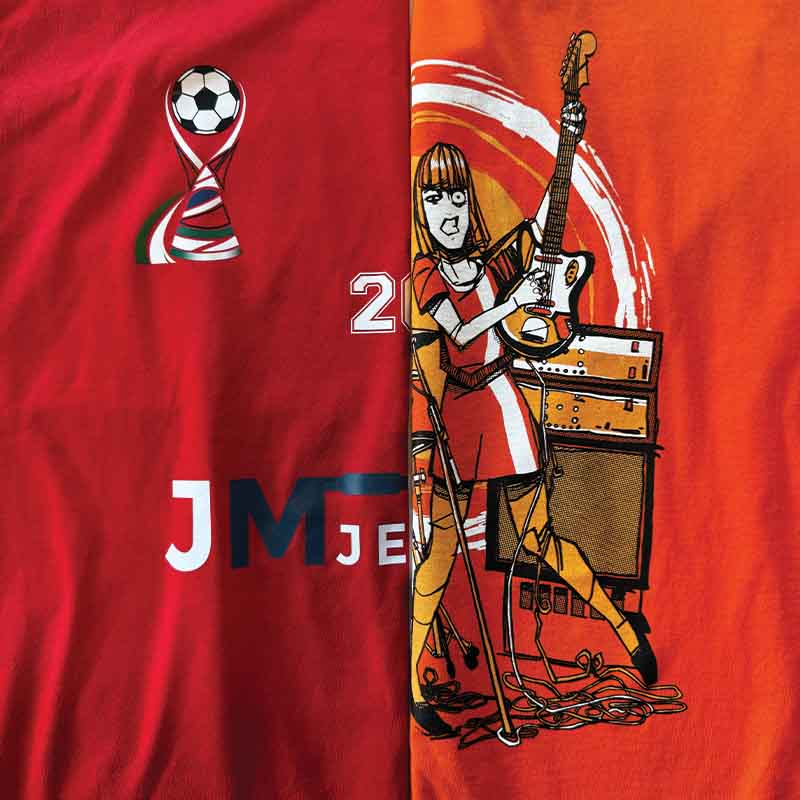
Screen printing is a traditional printing method where ink is applied through a mesh screen onto the T-shirt. Each colour in the design is applied separately.
This process creates a solid, durable print that sits cleanly on the fabric.
Where Screen Printing Works Best
Screen printing is most effective when:
- The design uses a small number of colours
- The artwork is bold and clearly defined
- The order quantity is high
It is widely used for merchandise, resale and large-scale distribution because it delivers consistent results across every unit.
Advantages of Screen Printing
- Lower cost per unit at higher quantities
- Strong, durable print finish
- Consistent output across large runs
- Ideal for logos and bold graphics
These advantages become more noticeable as the quantity increases.
Limitations to Consider
Screen printing works best within certain boundaries.
- Each additional colour needs an additional screen, so increases cost
- Not suited to gradients or complex shading - 4 colours max
- Setup is less efficient for small runs - it takes a while!
This means it is important to match the design complexity to the method.
What Is Full Colour Printing?
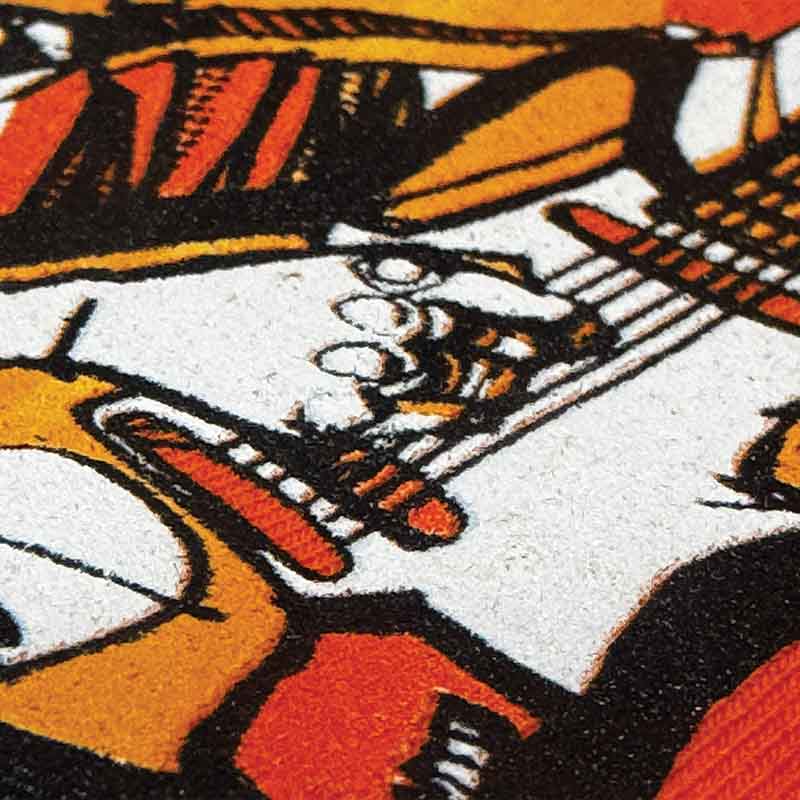
Full colour printing uses a digital process to apply the design onto a film that is then heat pressed onto the garment. This allows for far more detail and colour variation.
It is designed to reproduce artwork exactly as it appears, without needing to simplify it.
Where Full Colour Printing Works Best
Full colour printing is the better option when:
- The design includes multiple colours - honestly, no limits!
- There are gradients or fine details - you can design anything
- The artwork doesn't need any changes - what you design is what you get
It is commonly used for branded clothing, promotional T-shirts and designs that rely on visual detail.
Advantages of Full Colour Printing
- No restriction on the number of colours
- Ideal for detailed designs and images
- No need to simplify artwork
- Flexible across different order sizes
This makes it a practical option when design quality is the priority.
Limitations to Consider
While full colour printing is flexible, it has its own considerations.
- Cost per unit does not reduce as sharply at high volumes of screen print
- Not always the most efficient method for very large runs
- Less suited to designs intended for mass resale
For large-scale production, screen printing offers better cost-efficiency.
Cost Comparison: What Actually Changes?
Cost is often the deciding factor, especially for bulk orders. The main difference comes from how each method scales.
Screen Printing Costs
Screen printing has an initial setup element, but becomes more cost-effective as volume increases.
At higher quantities, the cost per unit drops significantly. This is why it is widely used for orders of 500 units and above - and why XAMAX® don't screen print on low volume orders.
Full Colour Printing Costs
Full colour printing does not rely on the same setup process, so it is more consistent across different quantities.
This makes it suitable for smaller and mid-sized orders where flexibility is more important than scale efficiency.
In simple terms:
- Smaller orders favour flexibility
- Larger orders favour efficiency
Which Method Lasts Longer?
Both methods produce durable results when applied correctly, but they behave slightly differently over time.
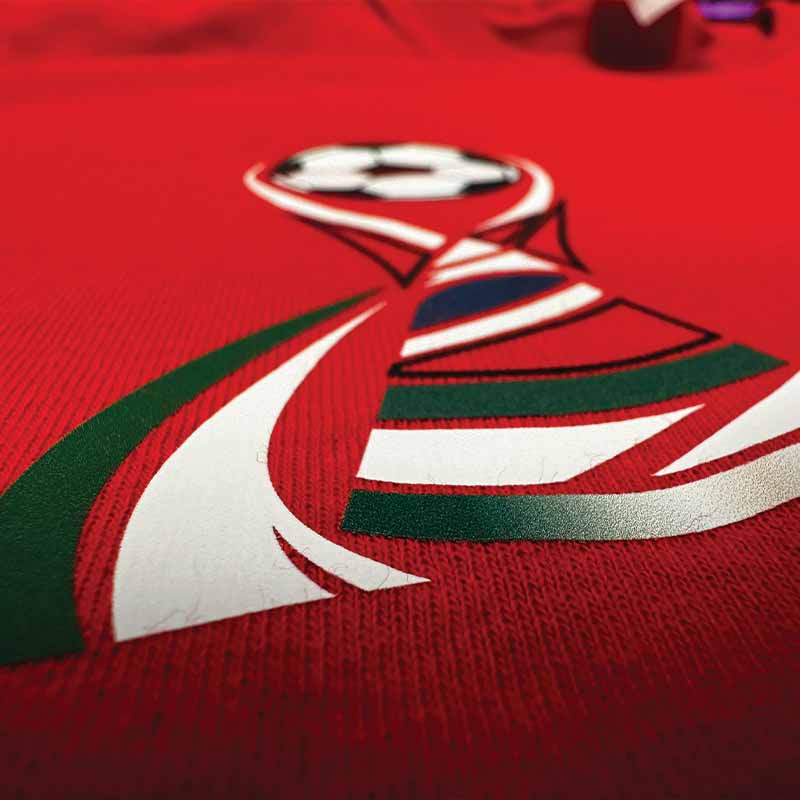
Screen printing creates a thicker layer of ink, which gives it a strong, long-lasting finish. It is well suited to repeated wear and washing.
Full colour printing sits more naturally within the fabric, which can create a softer feel. It holds up well, particularly when cared for correctly.
In most cases, durability is not a deciding factor. Both methods are suitable for bulk orders - and XAMAX® guarantees all print will outlast the garment.
Choosing the Right Method for Your Order
The best way to decide is to look at your order as a whole, not just the design.
Choose Screen Printing If:
- You are ordering in high volumes
- The design is simple and bold
- Cost per unit is a priority
- You are producing for resale or merchandise
Choose Full Colour Printing If:
- Your design is detailed or complex
- You need multiple colours or gradients
- You are ordering smaller or mixed quantities
- Design accuracy is important
Matching the method to your requirements ensures you get the best result without unnecessary cost.


How This Fits Into Bulk Ordering
When you are ordering in bulk, the print method should support your overall objective. For teams, events, promotions, and mixed-use orders, flexibility often matters more than scale efficiency.
For merchandise and resale, cost control and repeatability become the priority. Understanding this difference makes it easier to choose the right approach from the start.
Final Thoughts
Screen printing and full colour printing both have a clear place in bulk T-shirt production. The decision comes down to how your design, quantity and budget fit together.
A simple design at high volume will benefit from the efficiency of screen printing. A detailed design that needs to stay intact will benefit from the flexibility of full colour printing.
Once that decision is made, the rest of the ordering process becomes much more straightforward.
- Screen Print vs Full Colour T-Shirt Printing: Which Should You Choose? - 21st April 2026