
T-Shirts for Events: How to Plan, Order and Distribute
Ordering bulk custom t-shirts for an event sounds simple. In practice, it requires a bit of planning to get right. The decisions you make affect how smoothly your event runs, how your team looks, and how well your merchandise performs.
Whether you are organising a small event or something larger, the approach is the same. Plan your quantity properly, choose the right print method, and make sure distribution is straightforward on the day.
This guide covers the key steps so you can organise your T-shirts with confidence.
Start With the Role of the T-Shirts
Before deciding on quantities or designs, define how the T-shirts will be used. Most event orders fall into one or more of these categories.
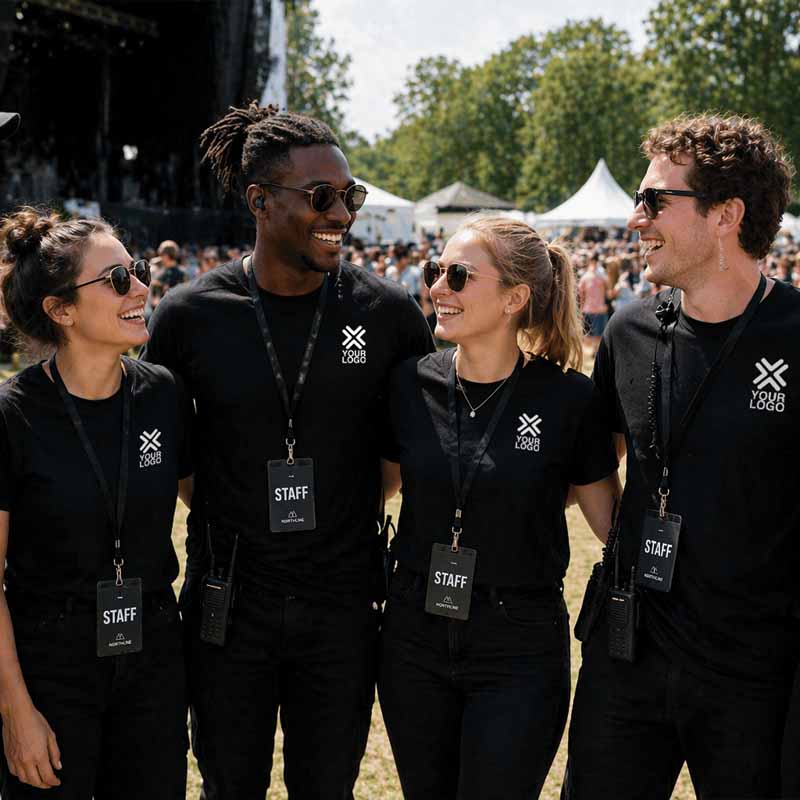
Staff and organisers
T-shirts help identify your team quickly. This is useful for both attendees and internal coordination.
These usually need to be consistent in design and easy to recognise from a distance.
Volunteers
Volunteers often need the same visibility as staff, but may require a wider size range and a more flexible distribution plan.
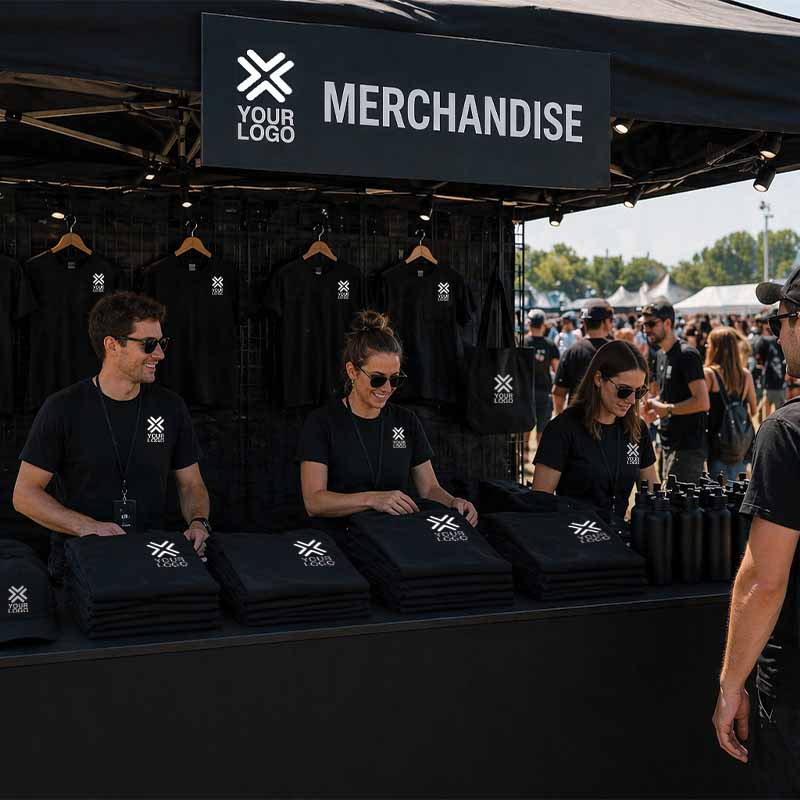
Merchandise
If you are selling T-shirts, they become part of your event offering. In this case, design, bulk pricing and stock levels all matter.
Giveaways and promotions
T-shirts can also be used to promote the event or sponsors. These are typically produced in larger quantities and distributed freely.
Once you understand the role of each T-shirt, it becomes easier to plan the rest of the order.
Estimating the Right Quantity
The most common issue with event T-shirts is under-ordering. Running out creates problems that are difficult to fix on the day. So how do you know how many t-shirts you need?
A simple approach is to break the requirement into parts.
Calculate your base numbers
Start with the known quantities:
- Number of staff
- Number of volunteers
- Expected merchandise stock
- Planned giveaways
Add a buffer
Events are unpredictable. Adding a buffer helps cover:
- Additional attendees
- Last-minute staff or volunteers
- Size changes
- Higher-than-expected demand
A buffer of around 10 to 20 percent is usually enough.
Align with bulk quantities
Once you have a total, match it to a practical order size:
- Around 50 for smaller events
- Around 150 for balanced coverage
- 500 or more for large events or merchandise
Choosing the nearest bulk level often improves cost efficiency.





Choosing the Right Print Method for Events
The print method should match how the T-shirts will be used.
Full colour printing for flexibility
This is a strong option when:
- Designs include multiple colours
- Sponsors or detailed graphics are involved
- You want to keep the artwork unchanged
It works well for mixed-use orders, where T-shirts serve multiple purposes.
Screen printing for volume
This is more efficient when:
- Quantities are higher
- Designs are simple and bold
- T-shirts are being sold or distributed at scale
Screen printing is commonly used for event merchandise because it provides consistent results across large runs.
Designing T-Shirts That Work at Events
Event T-shirts need to be clear, visible and practical.
When creating your design, focus on:
- Strong contrast so text and logos stand out
- Readable graphics from a distance
- A layout that works across all sizes
Designs that are too detailed can be harder to read in a busy environment
Choosing a Reliable T-Shirt
The garment itself needs to perform across a wide range of people and conditions.
The Gildan 3000 Heavy Cotton T-Shirt is widely used for event T-shirts because it offers:
- Lightweight feel suitable for long wear
- Consistent sizing across large groups
- A dependable surface for printing
This helps ensure every T-shirt looks and feels consistent, which is important for both staff and attendees.
Planning Size Distribution
Events involve a wide range of people, so your size breakdown needs to reflect that.
A balanced approach typically includes:
- Medium and large as the core sizes
- Smaller quantities of small and extra small
- Additional larger sizes based on your audience
If you are selling merchandise, it helps to keep extra stock in the most common sizes.
Organising Distribution on the Day
Distribution is often overlooked, but it can make a big difference during the event.
Staff and volunteer distribution
Prepare T-shirts for your staff in advance where possible. Group them by size and role to speed up handover.
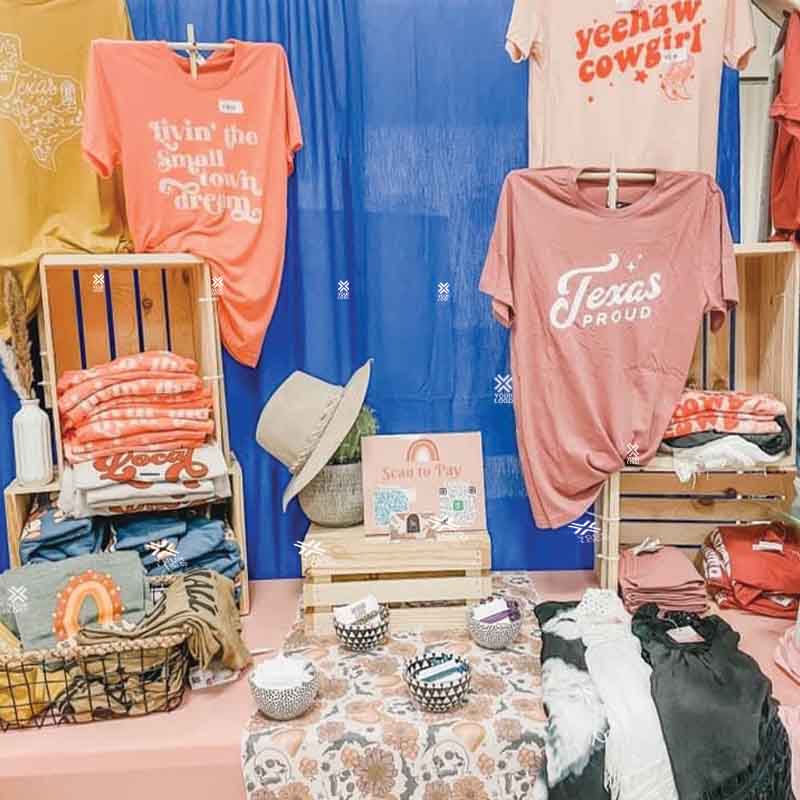
Merchandise sales
Keep stock organised and easy to access. Clear size labelling helps reduce delays and confusion.
Spare stock
Keep a small reserve for unexpected situations. This helps you respond quickly without disrupting operations.
Avoiding Common Event Mistakes
A few common issues can affect how well your T-shirt order performs.
Ordering too close to the event
Leaving it too late reduces flexibility and increases pressure.
Underestimating demand
Running out of T-shirts can affect both operations and sales.
Poor size planning
Having too many of one size and not enough of another creates unnecessary problems.
Overcomplicating the design
Complex designs can reduce clarity and increase production challenges.
A simple, well-planned approach avoids these issues.
Bringing It All Together
Planning T-shirts for an event comes down to a few key steps:
- Define how the T-shirts will be used
- Estimate your base quantity
- Add a practical buffer
- Choose the right print method
- Plan your size distribution
- Organise distribution in advance
Following this structure helps ensure your order supports the event rather than creating extra work.
What Happens Next?
Once you have a clear plan, the next step is choosing the right quantity and print method for your order.
That decision will determine how cost-effective and practical your T-shirts are on the day.
With the right preparation, your T-shirts become a simple and reliable part of your event setup.
- Custom T-Shirts for Businesses: Bulk Ordering Made Simple - 21st April 2026
- Bulk T-Shirt Pricing Explained: 50 vs 150 vs 500 vs 1000 - 21st April 2026
- How Many Custom T-Shirts Do You Need for Your Event or Team? - 21st April 2026